Manual cracking can look inexpensive until you count shell removal, sorting, rework, dust control, and the labour tied up in every batch. By comparing measured throughput, cleaned-nib yield, operating conditions, and full ownership cost, you can decide when commercial equipment earns its floor space and when hand processing remains sensible.
Key takeaways
- Choose manual cracking for irregular batches and low equipment utilisation.
- Control bean moisture, size and feed rate to protect nib yield.
- Compare labour, rework, maintenance, power and downtime—not purchase price alone.
- Test whole beans, husk separation, nib damage and cleaning before buying.
When does manual cracking stop making business sense?
Manual cracking stops making business sense when breaking beans, removing husk, sorting nibs, and reworking missed beans consume more paid hours than the resulting flexibility is worth. Home-scale work, micro-batches, product development, and occasional bakery production can still favour hand tools because batches are irregular and equipment would sit idle.
A startup supplying regular chocolate batches faces a different calculation. Compare a cocoa bean cracker versus manual processing using the same roasted, cooled beans and a measured batch trial.
Record:
- Whole-bean kilograms processed, minutes per batch, workers involved, and labour hours per kilogram
- Missed beans, rework time, inspection time, and separation time
- Machine whole-bean feed rate, cleaned-nib weight, shell weight, fines, and cleaned-nib throughput
| Option | What the figure means | Decision use |
|---|---|---|
| Manual processing | Labour-heavy sequence with variable fracture, shell carryover, and rework | Suitable for low, irregular volume |
| 100 kg/hour feed rate | Incoming whole beans, not saleable nib | Do not treat it as 100 kg/hour output |
| Cleaned-nib output | Usable nib after shell and fines removal | Compare this with manual yield |
Cocoa shell commonly represents 10–17% of incoming bean mass, so nominal capacity can overstate useful production. Calculate weekly hours released, multiply them by fully loaded labour cost, and compare that saving with equipment, installation, power, cleaning, maintenance, and downtime.
There is no universal kilogram-per-hour break-even point. Batch frequency, wage rate, roast schedule, and required shell specification determine whether mechanisation pays.
What bean condition and settings determine cracking quality?
Cracking quality starts with feed condition, not the machine’s advertised capacity. Commercial workflows usually roast cocoa beans, cool them, then crack them; feeding hot beans can soften or smear material, increase nib damage, change shell behaviour in the air stream, and destabilise separation. Raw fermented-and-dried beans require the supplier to confirm a different configuration.
| Feed condition | Likely problem | What to verify |
|---|---|---|
| Over-dry beans | More fines and broken nib | Moisture range and trial results |
| Overly moist or unevenly conditioned beans | Resistant fracture, smearing, poor separation | Conditioning method and feed moisture |
| Hot roasted beans | Softer material and unstable shell carryover | Maximum feed temperature |
Codex Standard CXS 141-1983 gives cocoa beans a maximum moisture level of 7.5% and a 12% maximum shell-and-germ limit by mass. Treat 12% as a bean-quality benchmark, not a promise that a cracker-winnower will leave only 12% shell carryover.
Before buying a cocoa bean cracker machine for food businesses, request these figures in writing:
- Permitted minimum and maximum bean size
- Acceptable moisture range
- Roast condition and temperature at feed
- Allowable bean-size distribution
Adjustable roller, impact, or clearance settings suit mixed sizes and changing roast conditions better than fixed settings. After every adjustment, inspect both nib and shell fractions: tighter action can open more beans but create excessive fines, while gentler action can leave unopened beans for recirculation.
How should you compare the real cost of mechanised and manual processing?
Cheaper means lower cost per kilogram of cleaned nib, not the lower purchase price. Manual work must include breaking, husk removal, sorting, inspection, rework, floor space, dust exposure, and inconsistent operator results.
| Option | Costs counted | Main risk |
|---|---|---|
| Manual | Labour, inspection, rework, space, dust control, rejected material | Results vary between operators |
| Mechanised | Equipment, installation, electrical work, power, maintenance, downtime | A high feed rate can produce low cleaned-nib output |
Price the complete system, not only the cracker:
- Include ducting, cyclone or dust filtration, shell collection, operator time, electricity, lubrication, screens, belts, bearings, replacement impact or cracking parts, cleaning labour, repairs, rejected material, and production lost during downtime.
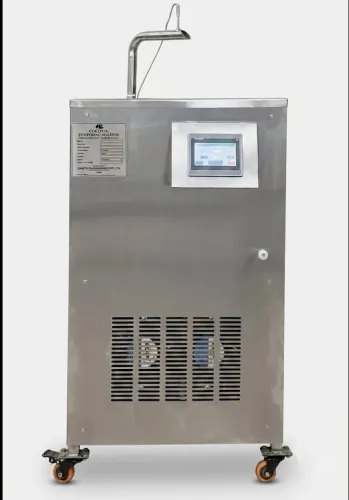
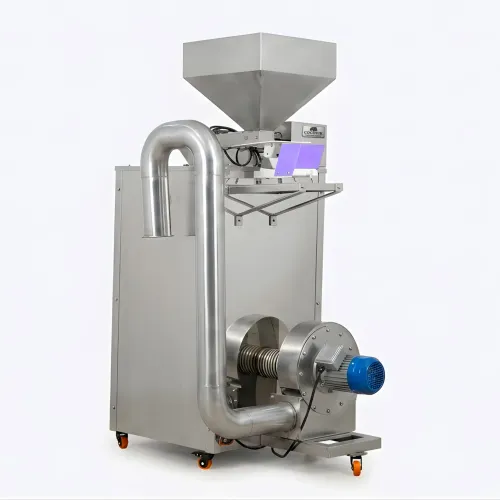
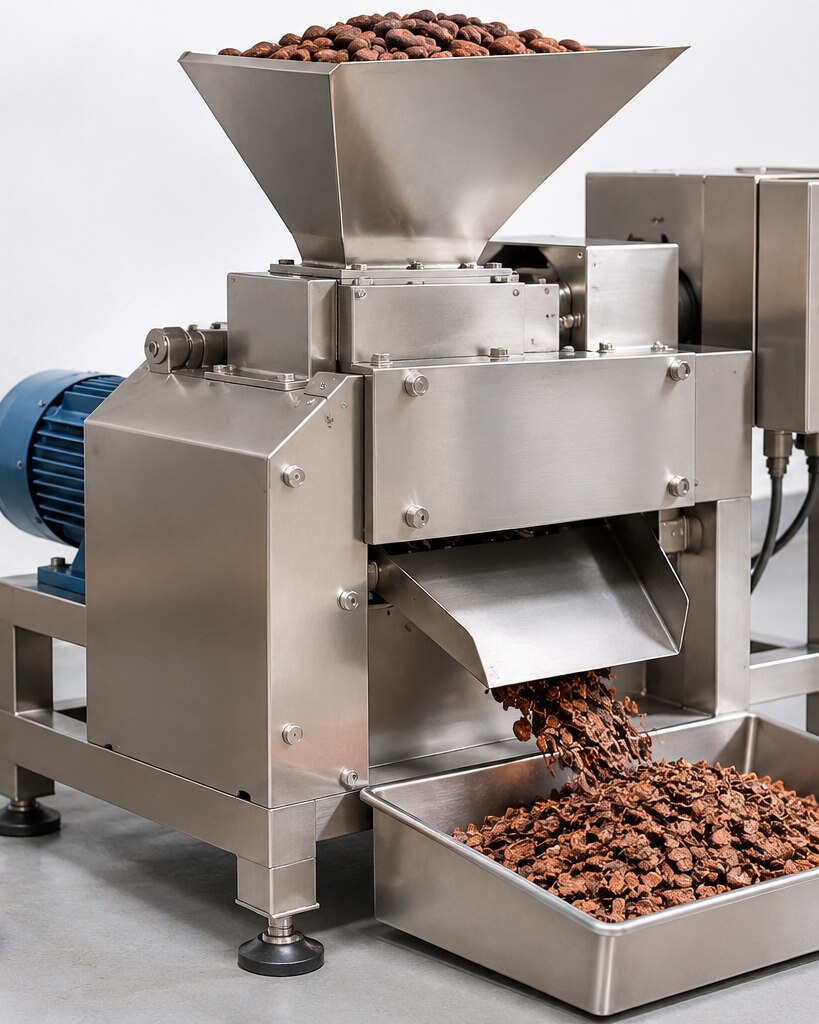
- Confirm whether the quotation includes air separation. Cracking opens the bean; winnowing separates shell from nib. A cracker alone can leave you needing a separate winnower, cyclone, filter, and shell collector.
Run a controlled trial with your own beans at the intended roast and cooling condition. Record whole-bean feed weight, cleaned-nib weight, shell weight, fines, processing time, labour hours, shell percentage in the nib, nib loss in the shell fraction, and material sent for rework.
Calculate cleaned-nib yield as cleaned-nib weight ÷ whole-bean feed weight × 100. Calculate cost per kilogram as total trial cost ÷ cleaned-nib weight, then compare that figure with manual processing. Excessive aspiration removes valuable nib with shell; weak aspiration leaves shell in the nib.
Use measured results, not a nominal capacity claim from commercial cocoa bean cracking equipment.
What does a workable daily cracking workflow look like?
A workable daily line protects bean condition as carefully as it controls the cracker. Moisture pickup between storage, roasting, cooling, and cracking changes fracture and aspiration, so a dry-room demonstration does not prove performance in a humid production room such as Coimbatore.
1. Receive and condition beans to the supplier’s stated moisture and size range. Roast them, cool them fully, inspect size distribution, and load only cooled beans into the hopper.
2. Feed steadily rather than flooding the chamber. Set feed depth, cracking clearance, air velocity, and screen opening together; changing one affects fracture size, shell carryover, nib loss, and fines.
3. Inspect the nib and shell fractions by weight, not appearance. Check shell in the nib, nib in the shell, fines, and unopened beans, then recirculate unopened beans through the controlled feed.
4. Select screens for the actual fracture distribution and collect shell and fines in sealed, dust-controlled containers. Keep extraction strong enough to remove shell without pulling valuable nib into the waste stream.
5. Stop the feed before stopping the machine. Clear the cracking chamber and aspiration duct, isolate electrical power, remove screens, brush or vacuum shell dust, and record feed depth, clearance, air setting, screen, yield, and losses.
Food-contact surfaces need smooth, accessible construction without ledges that trap dust. Keep lubricant away from the product path and demand quick-release access to the chamber, duct, and screens. Control airborne dust and secure shell collection to protect workers and prevent cross-contamination.
How can a food business validate a machine before buying it?
A search for cocoa bean cracker machine or manual cracking in coimbatore should end with a witnessed trial, not a catalogue claim. Use locally stored production beans, the actual roast profile, cooled feed, normal batch size, and the staff who will run the equipment.
Record the mass balance, including whole beans, cleaned nibs, shells, fines, and material sent for rework.
Request these results and terms in writing:
- Whole-bean feed rate, cleaned-nib throughput, permitted moisture range, bean-size range, shell carryover, and nib loss
- Fines percentage, power requirement, noise level, dust controls, changeover time, cleaning access, spare-part availability, warranty exclusions, and maintenance intervals
- Confirmation that the quotation includes the cracker, winnower, cyclone, dust filter, shell collector, controls, and installation, or identifies each as a separate cost
| Option | Strength | Best fit |
|---|---|---|
| Manual cracking | Low equipment cost; high sorting labour and inconsistency | Irregular, very small batches |
| Outsourced processing | Avoids capital cost; adds scheduling and transport | Occasional production |
| In-house machine | Reduces repeated labour; requires upkeep and volume | Regular, labour-heavy batches |
A bakery or chocolate shop with low, irregular output may prefer manual work or a shared service. SAHITH ENGINEERING is worth approaching for a bean-specific trial, not a generic capacity statement; compare its measured yield and shell separation with the fully loaded cost of continuing manual work.
Buy only when the trial proves acceptable yield, hygiene access, shell control, and payback at your real feed rate.
Related products
 | Cocoa Bean Winnower Machine Automatic Cocoa Bean Cracker Machine 🔹 Automatic Cocoa Bean Cracker Machine – Industrial Cocoa Processing Equipment We are a leading manufacturer and supplier of cocoa bean cracker... View product → |
 | Cocoa Bean Winnower Machine COCOA BEAN CRACKER & WINNOWER MACHINE The Cocoa Bean Cracker & Winnower Machine is a vital piece of equipment in the chocolate production process, designed to efficiently break roasted... View product → |
Frequently asked questions
When does manual cocoa bean cracking stop making business sense?
It stops making sense when paid labour for cracking, husk removal, sorting and rework costs more than the flexibility of hand processing. Manual work still suits home-scale production, micro-batches and occasional product development.
What bean conditions and settings affect cracking quality?
Bean moisture, size distribution, feed rate and cracker adjustment affect shell breakage, nib damage and the number of missed whole beans. Test representative batches rather than relying on an empty-machine demonstration.
How should a business compare a cocoa bean cracker with manual processing?
Calculate labour hours, wages, rework, power, maintenance, cleaning time, downtime and usable nib yield for both methods. Divide total processing cost by the kilograms of acceptable nibs produced.
What should a daily cocoa bean cracking workflow include?
Plan inspection and weighing, controlled feeding, shell and nib separation, sorting, collection, rework of missed beans, cleaning and production records. Record batch weight, output, rejects and stoppages.
How can you validate commercial cocoa bean cracking equipment before buying?
Run your own representative beans through the machine and measure throughput, nib damage, shell carryover, whole-bean carryover, dust, cleaning time and adjustment changes. Ask for a written test record and service details.
Related products
 | Cocoa Bean Winnower Machine 🔹 Cocoa Bean Cracker Machine – Industrial Cocoa Processing Machine We are a leading manufacturer and supplier of cocoa bean cracker machines in... View product → |
 | Cocoa Bean Winnower Machine Cocoa Beans Cracker and Winnower 🔹 Sahith Cocoa Beans Cracker & Winnower Machine We are a leading manufacturer and supplier of cocoa beans cracker and winnower machines in... View product → |
Keywords