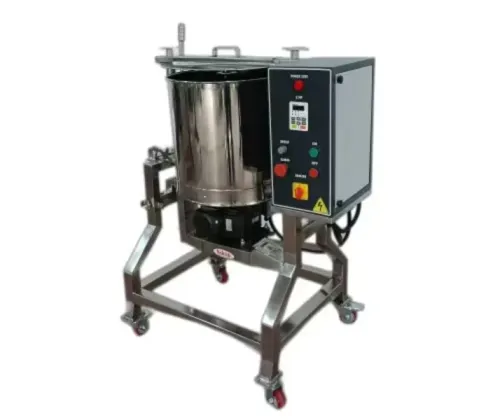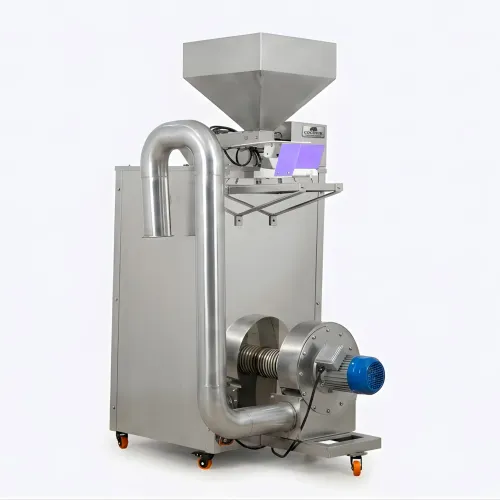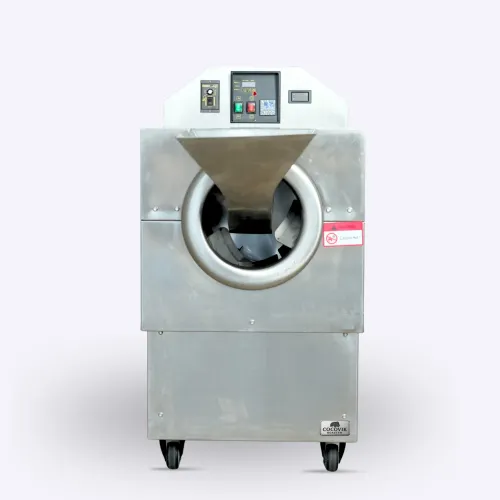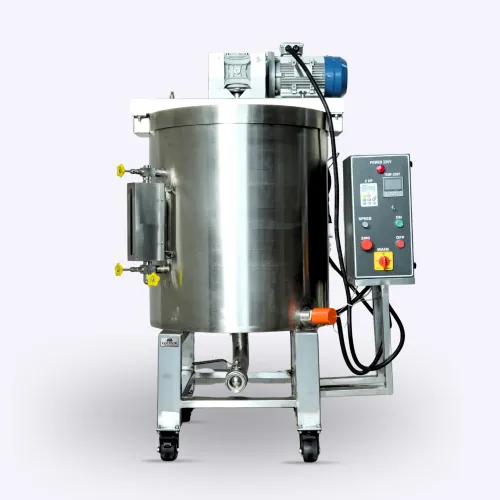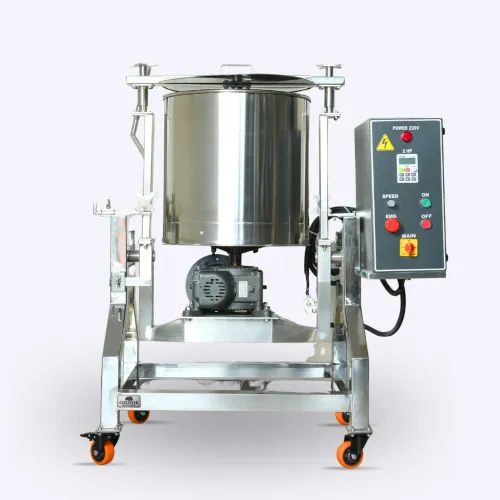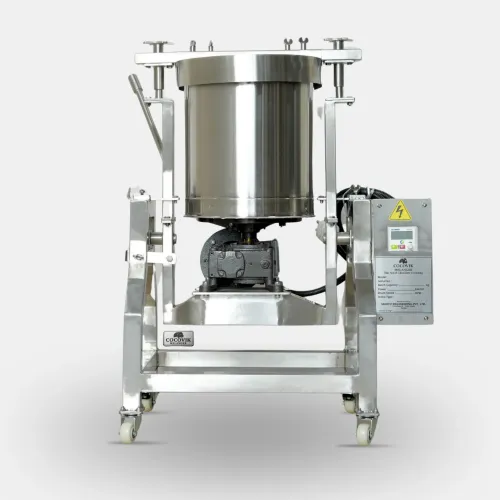
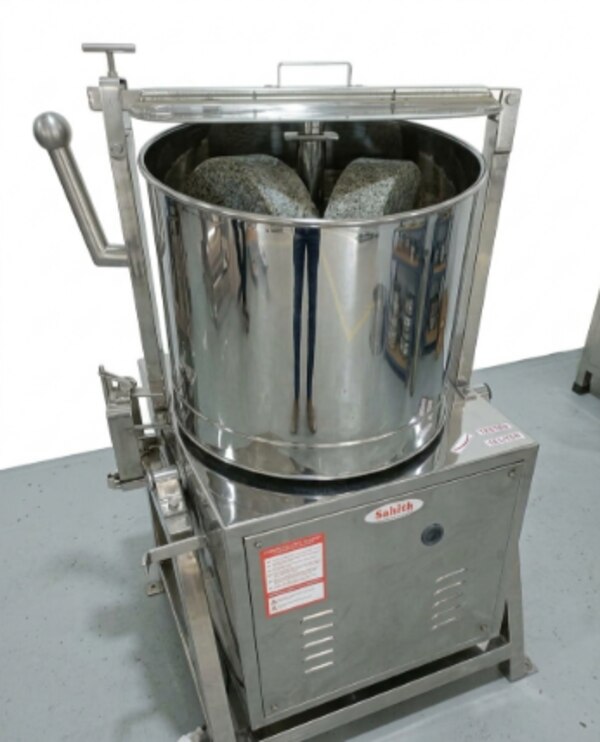
A 40-litre rating describes a vessel, not automatically the quantity a customer can grind in one batch. Distributors need to verify usable fill, recipe suitability, construction, electrical supply, discharge access, sanitation, and service documentation before comparing a 40-litre machine with 30-, 50-, or 60-litre alternatives.
Key takeaways
- Treat 40 litres as nominal volume; confirm minimum, working and maximum batch sizes.
- Match product temperature and grinding method before approving hot processing.
- Demand stainless grade, motor, speed, bowl thickness and tilting details in writing.
- Verify electrical supply, clearance, drainage and wash-down limits before installation.
What does 40 litres mean in a wet grinder quotation?
“40 litres” normally means the bowl or drum’s nominal volume, not the usable batch size. Ask for the minimum batch, recommended working fill, and maximum safe fill separately.
Working space must allow splash control and ingredient movement while keeping stones or abrasive media immersed; overfilling causes spills and drive strain, while underfilling wastes power and accelerates wear.
Plan idli and dosa batter, vada batter, chutney, masala paste, rice, and dal by recipe-specific volume, not a universal kilogram figure. Soaked ingredients, water ratio, viscosity, and stone geometry change the load. Require a test with your formulation, recording input volume, output, grinding time, and product left beneath the stones.
- Obtain the three fill limits in writing, plus the bowl’s internal dimensions.
- Request a test batch for each important recipe before promising throughput.
- Record whether a 40 litre tilting wet grinder discharges cleanly without excessive scooping or transfer labour.
| Model | Batch frequency and daily output | Space, labour, and cleaning | Cost of under-filling |
|---|---|---|---|
| 30 litre | More frequent batches; suits lower daily demand | Least floor space and transfer volume; shorter cleaning | Lowest idle capacity |
| 40 litre | Middle ground for mixed recipes and steady output | Moderate space, transfer labour, and cleaning time | Moderate if recipes vary |
| 50 litre | Fewer batches for higher output | More space and heavier transfers; longer cleaning | Higher when demand is low |
| 60 litre | Fewest batches at high demand | Greatest clearance, handling, and cleaning burden | Highest when loads remain small |
The phrase “40 litre stainless wet for grinder india” needs clarification before it appears on a quotation or search page: state whether 40 litres is nominal bowl volume, usable working capacity, or maximum batch size, and identify the stainless parts included.
Which preparations suit the machine, and when is hot grinding safe?
A 40-litre machine suits idli and dosa batter, vada batter, chutney, coconut and nut pastes, spice pastes, curry bases, and similar wet-grinding jobs. Match every recipe to viscosity, required particle size, starting and batch temperature, residence time, and cleaning frequency; a thick nut paste and a fluid dosa batter do not impose the same load.
Before marketing a stainless commercial wet grinder india, obtain recipe-specific evidence:
- Record the working fill, batch time, temperature rise, and final texture.
- Confirm whether the stones maintain the required immersion at that fill.
- Set cleaning frequency from sticky, oily, salty, or allergenic formulations.
| Application | Evidence required | What it does not prove |
|---|---|---|
| Batter, chutney, masala, or curry base | Viscosity, particle-size target, residence time, and measured test batch | Chocolate refining performance |
| Cocoa or chocolate mass | Stone gap, recirculation, residence time, viscosity, and temperature-rise data | A 20–25 micrometre result from bowl size or motor rating alone |
| Hot wet processing | Maximum product temperature, starting temperature, and cooling method | Hot-food capability from stainless steel construction |
Stainless steel identifies construction, not thermal safety. Require written confirmation of the maximum product temperature, jacket or ambient cooling, and restrictions on loading, opening, and handling hot mass.
For hot processing, use heat-resistant PPE, controlled filling, fixed guarding, and a measured test batch before sale. Stop if the supplier cannot state the safe temperature limit or cooling arrangement.
Which construction and drive specifications determine performance?
A 7.5 hp motor does not prove better grinding. Compare the complete drive, stone, and hygiene specification instead; transmission losses, stone gap, scraper action, and loaded speed determine the batch result.
| Specification | What to require | Why it matters |
|---|---|---|
| Stone assembly | Natural or engineered stones; number, diameter, thickness, hardness, and gap-adjustment range | Controls particle size, wear, and recipe flexibility |
| Scraper | Material, profile, clearance, and replaceable design | Prevents wall build-up and uneven grinding |
| Drive | Operating speed under load, shaft diameter and material, belt, chain, gearbox, or direct transmission | Reveals torque delivery and service risk |
| Motor | Power, rated voltage, phase, full-load current, overload relay, and direct-on-line, star-delta, or inverter start | Horsepower alone hides electrical and starting requirements |
| Spare parts | Stone and scraper life, replacement interval, and Indian stock of stones, scrapers, bearings, and seals | Unplanned wear creates downtime and freight cost |
A quotation for a stainless commercial wet grinder india search should identify SS grade for the bowl, frame, shaft, and every product-contact fitting. SS 304 is a common baseline; SS 316 resists chlorides better at higher cost, while SS 202 is not an equivalent wet-food substitute.
Inspect the fabrication, not just the shine:
- Require continuous welds, ground and polished internal seams, no exposed product-zone threads, and no liquid-trapping ledges.
- Confirm access to the shaft seal and stone holder for inspection and replacement.
- Reject “polished stainless body” as proof of hygienic construction; demand grade records or positive-material identification.
What must be verified before installation, tilting, and wash-down?
A 40 litre tilting wet grinder can reduce scooping and manual lifting of viscous batter, but tilting does not prove controlled discharge, faster cleaning, or pump-free transfer. Verify the complete workflow before accepting the machine.
1. Record the tilt angle and confirm mechanical locks in both operating and tilted positions. Check rear and side clearance, hinge and locking-pin access, bowl-removal method, and the quantity of product left beneath the stones after tipping. Ask whether a separate outlet or pump is included.
2. Inspect spill paths and cleanability around hinges, outlets, underside surfaces, seals, bearings, drive components, and controls. Reject any product-contact area that cannot be reached for inspection without avoidable dismantling; trapped water at welds and exposed seals invite corrosion or bearing failure.
3. Match the quotation to the Indian site supply: 230 V single-phase or approximately 415 V three-phase at 50 Hz. Obtain full-load current, connected load, starter or inverter specification, overload protection, isolator rating, cable size, earthing requirement, and control-panel rating before wiring.
4. Demand cleaning instructions that name permitted chemicals, maximum wash-water temperature, pressure-washing restrictions, and protection for shaft seals and bearings. Chloride-bearing cleaners and high-pressure water can damage stainless surfaces and bearings.
5. During handover, verify level installation, rotation direction, lubrication, belt or coupling condition, and emergency isolation. Run an actual-product test batch and record discharge, residue beneath the stones, spillage, cleaning access, and safe operation in both locked positions.
What should a distributor demand in the quotation and support package?
Put these figures on the quotation, not in a later conversation: nominal bowl volume, minimum fill, recommended working fill, maximum safe fill, and recipe-specific demonstrated throughput. Also state net weight, packed dimensions, lifting points, centre of gravity, tilt clearance, and the floor area required for operation and cleaning.
| Model | Best procurement question | Main trade-off |
|---|---|---|
| 30 litre | Will smaller batches meet daily demand? | More batches and cleaning |
| 40 litre tilting wet grinder | What throughput did the sample recipe achieve? | Balanced capacity and space |
| 50–60 litre | Will output justify transfer and cleaning space? | Higher output, heavier handling |
A distributor should attach an electrical schematic, motor nameplate, operating and cleaning manuals, spare-parts list, warranty exclusions, installation procedure, and commissioning record. Ask for written evidence of product-contact grades, maximum process temperature, permitted wash-down method, seal and bearing protection, service access, pallet or forklift needs, and the bowl’s locked operating and tilted positions.
Require a sample-batch inspection before accepting “heavy duty” claims. Check actual texture, temperature rise, discharge, residue beneath the stones, vibration, noise, and cleaning access using the customer’s recipe. SAHITH ENGINEERING can add practical value here through recipe testing, installation guidance, spare-parts availability, and documented handover.
These records let a wet grinder supplier for distributors answer Indian buyers’ questions after delivery: which parts to stock, how to clean safely, what electrical supply is required, what throughput was proven, and whether a warranty exclusion applies. Ask the customer to sign the commissioning record.
Related product
 | Commercial Tilting Wet Grinder Stainless Commercial Wet Grinder 40 Litres – Heavy Duty Wet Grinder Machine 40 Litre Tilting Wet Grinder Manufacturer in Coimbatore We are a leading manufacturer and supplier of 40 litre stainless steel tilting wet grinder... View product → |
Frequently asked questions
What does 40 litres mean in a wet grinder quotation?
It normally identifies the bowl’s nominal volume. Ask separately for the minimum batch, recommended working fill and maximum safe fill.
Which preparations suit a 40 litre wet grinder?
Use it for preparations that match the machine’s grinding system, batch size and viscosity. Confirm suitability for each recipe, including cocoa, chocolate, batters, pastes or other products.
When is hot grinding safe?
Approve hot grinding only after the supplier confirms the permitted product temperature, seal and bearing limits, motor-duty requirements and wash-down procedure.
What specifications determine wet-grinder performance?
Compare stainless-steel grade, bowl thickness, agitator or stone arrangement, motor power, operating speed, drive protection, discharge design and tilting mechanism.
What must you verify before installation and wash-down?
Confirm electrical supply, machine footprint, access and lifting clearance, drainage, earthing, cleaning chemicals, water exposure limits and safe tilting clearance.
Keywords