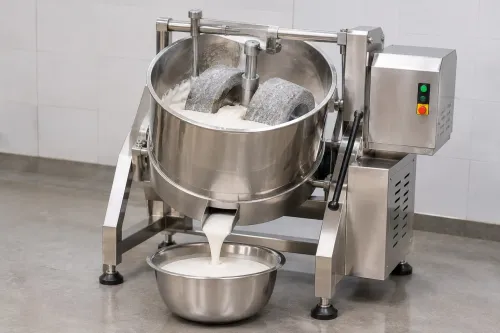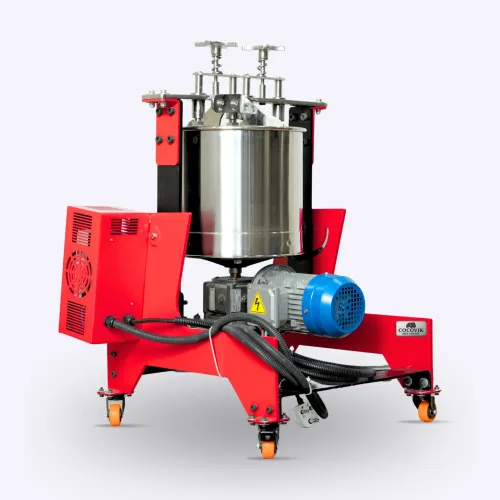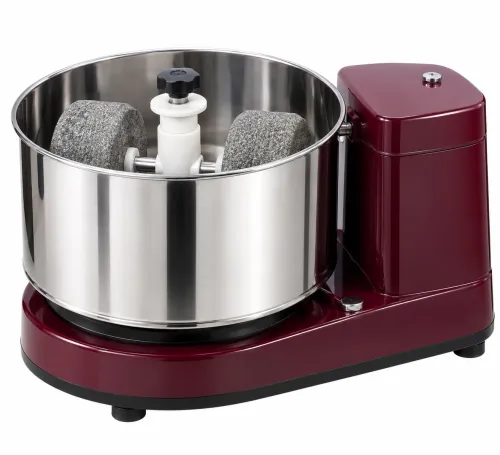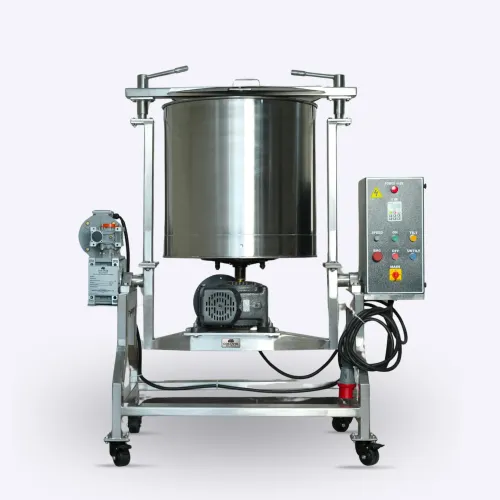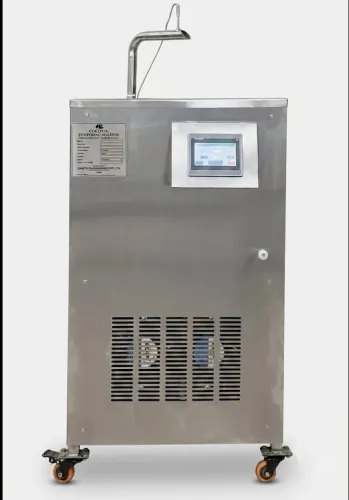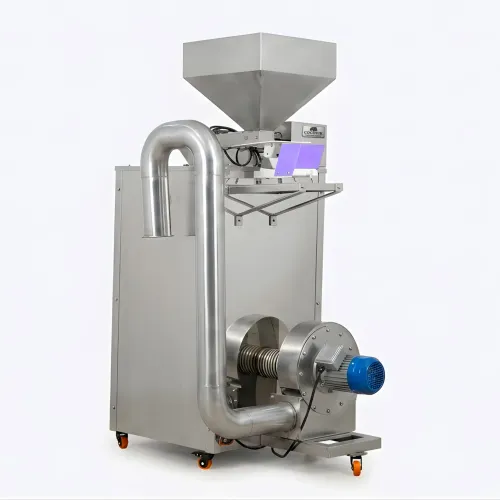
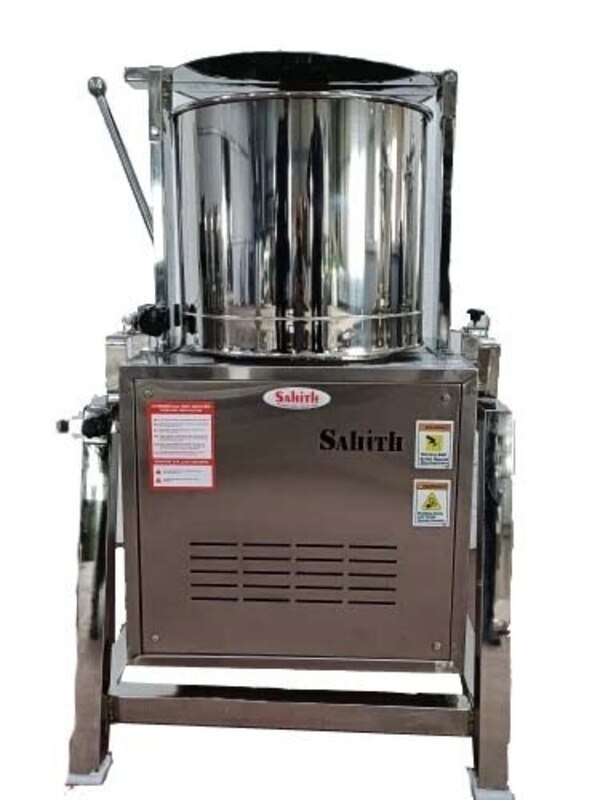
A forty-litre wet grinder can produce large batches of Kerala hotel staples, but its vessel volume does not make it a dough kneader. You will be able to assign each preparation to the right machine, calculate a workable batch plan, and compare equipment and supplier quotations against your actual kitchen demand.
Key takeaways
- Use wet grinders for high-moisture batters, pastes, and soaked ingredient blends.
- Leave headroom and control batch weight to prevent splashing, overload, and uneven grinding.
- Choose a dough kneader for developed dough, not every wet mixture.
- Verify trial results, motor details, safety features, and Kerala service coverage.
What a forty-litre wet grinder can produce in a Kerala commercial kitchen
A forty-litre wet grinder earns its floor space when your Kerala kitchen repeatedly produces wet, high-moisture batches rather than dry or low-hydration dough. For hotels, caterers, restaurants, bakeries, and central kitchens, these forty litre wet grinder applications reduce repeated small-batch grinding during tight breakfast and service windows.
- Idli and dosa batter for breakfast service
- Vada batter for hotels, restaurants, and catering production
- Coconut chutney bases, including roasted or tempered variants
- Wet masala pastes for sambar, kurma, fish curry, and vegetable gravies
- Coconut-based curry pastes and gravy bases
- Ginger-garlic, chilli, onion, and herb mixtures for kitchen prep
- Bakery fillings, savoury spreads, and other moist blended ingredients
A stainless wet grinder for hotels is not automatically a dough machine. Compare the job before you buy:
| Machine | Best suited to | What goes wrong if misused |
|---|---|---|
| Wet grinder | Batter, chutney, masala, and coconut preparations | Thick mixtures smear, heat up, or overload the drive |
| Spiral or horizontal dough kneader | Bread, parotta, chapati, and pizza dough | A grinder may fail to develop gluten evenly |
| Planetary mixer or kneader | Smaller dough batches, fillings, creams, and versatile mixing | The attachment and bowl must match the recipe and load |
Dough requires controlled gluten development and high peak torque. Ask for the exact maximum dough load in kilograms; never treat a 40-litre vessel as 40 kilograms of dough.
How to plan a safe, workable batch inside the vessel
Treat 40 litres as vessel size, not batch size. Set usable production volume after allowing headspace, ingredient displacement, splash, and the clearance needed for the stone, scraper, or agitator. A practical trial ceiling is 28 litres for fluid batter, then adjust only after the manufacturer confirms the maximum working fill.
- Ask for the exact model’s maximum working volume and maximum batch mass. If no figure exists, start with 70% of nominal volume, or 28 litres, and observe movement, discharge, motor load, and spillage.
- Load soaking water and softened ingredients before dry ingredients. For idli, dosa, or vada batter, leave room for circulation and later fermentation; do not fill the vessel to 40 litres because the batter can expand and overflow.
- Reduce the fill for thick masala and coconut preparations. A 20–25 litre paste can impose more torque than 28 litres of watery batter, so judge the batch by motor effort and product movement, not litres alone.
- Record starting and finishing temperature. Prolonged grinding adds heat through friction and motor losses, which can change fermentation and coconut-based flavour.
- Keep dough out of this conversion. Bread, parotta, chapati, and pizza dough require the stated kilogram capacity of a dough kneader, based on its agitator, gearbox, hydration, and torque rating—not a 40-litre vessel.
These checks define sensible forty litre wet grinder applications. They also help you select a commercial wet grinder for kitchens without mistaking nominal capacity for safe output.
Where the wet grinder ends and the dough kneader begins
Use the wet grinder for products that are deliberately wet: idli and dosa batter, vada batter, coconut chutney, coconut-based gravy, wet masala, curry bases, and smooth paste. Its grinding action suits high-moisture ingredients; it does not replace gluten development, portioning, or proofing.
Bread, chapati, parotta, and pizza dough belong in equipment rated for dough torque. A wet grinder can smear a wet dough, but low-hydration dough creates peak loads, sticks to unsuitable surfaces, heats unevenly, and may overload the gearbox.
| Option | What it does | When to compare it |
|---|---|---|
| Spiral mixer | Uses a spiral hook and rotating bowl for repeatable gluten development | Bread, pizza, and other yeast doughs requiring controlled temperature and consistent batches |
| Planetary mixer | Uses interchangeable tools for mixing, whipping, and lighter dough work | Bakeries needing one machine for cream, batter, fillings, and moderate dough quantities |
| Planetary kneader | Uses a heavy-duty planetary action for dense dough and larger torque demands | Chapati, parotta, or stiff commercial dough where the manufacturer states a maximum dough load |
Do not convert 40 litres into 40 kilograms of dough. Ask for the maximum batch mass in kilograms for your recipe, plus permitted continuous operating time, batches per hour, restart frequency, overload and thermal protection, gearbox lubrication, and access to bearings, seals, belts, and scrapers.
A search for forty litre wet grinder commercial for dough kneader Kerala can lead to the wrong purchase if bowl volume replaces torque data. Choose a commercial dough kneader Kerala supplier only after a recipe trial confirms dough temperature, mixing time, sticking, and batch consistency.
Does one forty-litre machine fit your daily service pattern?
Choose one forty-litre unit when your batter demand is concentrated into a short service window and the machine’s permitted duty cycle covers the required batches per hour. Choose several smaller units when meals are served across separate outlets, recipes change frequently, or one breakdown would stop production.
| Decision factor | One forty-litre grinder | Several smaller machines |
|---|---|---|
| Meals served | One central kitchen with predictable volume | Multiple meal periods or outlets with uneven demand |
| Batter demand | Large, repeatable idli, dosa, or vada batches | Small recipes, varied menus, or frequent top-ups |
| Service windows | Fast production before breakfast or dinner | Batter made throughout the day |
| Labour | Fewer loading, unloading, and monitoring tasks | More operators, but parallel work during peaks |
| Cleaning | One larger vessel and discharge point | More vessels to wash, but less product changeover per machine |
| Backup | A single failure removes all grinding capacity | One unit can continue while another is serviced |
Do not compare motor horsepower alone. Check permitted continuous operating time, batches per hour, restart frequency, overload and thermal protection, gearbox lubrication, and access to bearings, seals, belts, and scrapers. A commercial wet grinder for kitchens suits wet batter, chutney, and masala; it does not automatically handle low-hydration dough.
If a search for “commercial dough kneader kerala” reflects a real dough requirement, request the manufacturer’s maximum dough load in kilograms for your recipe, not 40 litres converted into 40 kilograms. Run a written trial covering ingredient mass, batch time, discharge, texture, temperature rise, and cleaning before choosing.
What to verify in the quotation, recipe trial, and Kerala service plan
A quotation is incomplete if it gives only horsepower and 40-litre capacity. A buyer searching for a forty litre wet grinder commercial for dough kneader Kerala supply must request the maximum dough load in kilograms for the exact recipe, because hydration, agitator design, gearbox torque, and batch temperature decide capacity.
Check these points before approval:
| Area | Confirm in writing | Failure exposed |
|---|---|---|
| Mechanical | Duty cycle, batches per hour, restart frequency, gearbox rating and lubrication, and access to bearings, seals, belts, and scrapers | Overheating, slipping, or difficult repairs |
| Electrical | Voltage, phase, motor kilowatts, running current, starter type, earthing point, overload relay, and thermal cut-out | Nuisance trips or unsafe operation |
| Hygiene and safety | Food-contact steel grade, smooth welds, drain arrangement, cleaning access, lid or guard interlock, emergency stop, and discharge safety | Trapped residue, contamination, or injury |
| Support | Warranty exclusions, Kerala technician response time, spare-part availability, installation, operator training, and service charges | Long stoppages after purchase |
Run a written recipe trial using your actual soaked ingredients, water quantity, batch mass, grinding time, discharge time, final texture, temperature rise, and cleaning method. Test batter and masala separately from low-hydration dough; a wet grinder can smear dough without developing gluten or surviving peak kneading torque.
Ask SAHITH ENGINEERING to record these results against the quoted model, not a similar machine. Compare a stainless wet grinder for hotels with a spiral or horizontal kneader when bread, parotta, chapati, or pizza dough is the main workload.
Related product
 | Commercial Tilting Wet Grinder Stainless Commercial Wet Grinder 40 Litres – Heavy Duty Wet Grinder Machine 40 Litre Tilting Wet Grinder Manufacturer in Coimbatore We are a leading manufacturer and supplier of 40 litre stainless steel tilting wet grinder... View product → |
Frequently asked questions
What can a forty-litre wet grinder produce in a Kerala commercial kitchen?
It suits repeated high-moisture work such as idli and dosa batter, soaked grain grinding, coconut-based pastes, and other wet ingredient blends. Match the vessel load to the recipe rather than treating forty litres as usable product volume.
How do you plan a safe batch inside a forty-litre wet grinder?
Confirm the recipe’s water ratio, ingredient weight, grinding time, and required headroom. Start with a controlled trial, check for splashing and motor strain, and record the finished yield before setting a production batch size.
When should you use a dough kneader instead of a wet grinder?
Use a dough kneader when the process requires mixing and developing wheat, maida, or other dough through controlled kneading. A wet grinder is better suited to fluid or semi-fluid mixtures and soaked ingredients.
How do you check whether one forty-litre machine fits your daily service pattern?
Compare daily demand with batch yield, cycle time, cleaning time, operator availability, and peak service windows. Choose the machine only after checking how many complete cycles your kitchen can finish before service.
What should you verify before buying a commercial wet grinder in Kerala?
Request the motor rating, electrical requirements, vessel and contact-part material, usable batch guidance, safety controls, warranty terms, installation scope, spare-parts availability, service response area, and a recipe trial using your ingredients.
Keywords