Choose capacity from the busiest production window, not from average daily sales or the litre number printed in a catalogue. By calculating finished-batter demand, usable batch volume, headspace, cycle time and cleaning time, you can identify the right machine for a darshini, hotel, caterer, mess, bakery or central kitchen.
Key takeaways
- Size the grinder for your busiest preparation window, not average daily demand.
- Convert dosa orders and idli portions into finished batter litres before comparing machines.
- A 20-litre grinder’s usable batch depends on ingredient volume, recipe, and manufacturer limits.
- Choose multiple smaller batches when menus, freshness, or backup capacity matter.
How do you calculate grinder capacity from Karnataka meal demand?
To decide what size commercial tilting wet grinder a kitchen needs in Karnataka, start with the busiest preparation window, not average daily consumption. Convert meals, dosa orders, idli portions and menu mix into finished batter litres. Then divide that requirement by the complete batches the machine can produce before service begins.
- Count loading, grinding, scraping, tilting, discharge and wash-down time.
- A two-hour window requiring 60 litres needs four completed batches only if the machine’s real cycle fits within those two hours.
- Record dry rice and urad-dal weights, soaking expansion, water addition, aeration and final batter volume; one recipe is not universal.
- Compare machines using the same soaked-ingredient recipe and finished-batter target.
| Production pattern | Capacity calculation | Planning implication |
|---|---|---|
| Overnight batter | Total requirement ÷ one or two complete cycles | One or two large production cycles may suffice |
| Twice-daily batter | Each window calculated separately | Size for the busier window, with storage and fermentation space |
| Continuous production | Peak overlapping demand | Prevent breakfast queues, not merely cover the daily total |
A nominal vessel size is not finished-batter capacity. Headspace, batter thickness and soaked-grain volume reduce the usable load, so confirm kilograms per batch and litres of finished batter per batch. Commercial wet grinder capacity stated only in litres is insufficient; also verify batches per hour and cleaned-and-ready time.
A machine that meets the daily total but misses the peak window is undersized.
What size suits a darshini, hotel, caterer or central kitchen?
Choose the machine by operating pattern, then confirm its recipe-specific usable load. A wet grinder for food businesses must meet the busiest preparation window, not merely the kitchen’s daily total.
| Size | Best fit | Operating pattern |
|---|---|---|
| 5 litres | Test batches, limited chutney or very small outlet | Unlikely to support a busy dosa-and-idli breakfast alone |
| 10 litres | Small hotel, bakery kitchen or darshini | Modest, scheduled batter production |
| 15 litres | Small-to-medium mess or restaurant | More room when demand peaks twice daily |
| 20 litres | Dosa-and-idli outlet or caterer | Several medium batches, if the cycle meets peak demand |
| 30 litres | Larger hotel, mess or caterer | Concentrated, high-demand production |
| 50 litres | Central kitchen or high-volume operation | Enough demand to keep the minimum load effective |
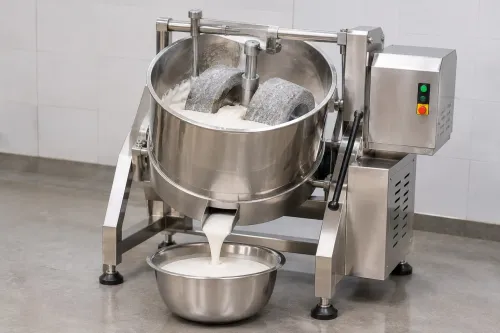
A 20 litre tilting wet grinder is a practical middle choice, but plan around the supplier-confirmed working volume, not 20 litres of finished batter. Headspace, batter thickness, water ratio, soaked-grain volume and the grinding design all change the usable load.
Treat these sizes as starting points, not guarantees. Before ordering, confirm:
- Kilograms of soaked grain per batch
- Litres of finished batter per batch
- Batches per hour at the required texture
- Minutes from loading to cleaned-and-ready status
A 50-litre bowl that needs more material than your kitchen produces can grind poorly, waste power and complicate cleaning. Conversely, a 10-litre machine can become a bottleneck when breakfast demand arrives in one sharp window. Test the intended recipe at the proposed load before committing.
What does a 20-litre tilting wet grinder actually handle?
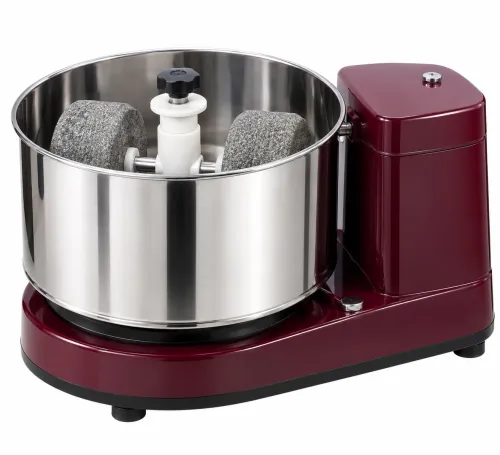
A 20-litre tilting wet grinder handles less than 20 litres as a working batch. Treat 20 litres as the nominal bowl or vessel volume until the supplier documents the usable load. Headspace prevents splashing, overflow and unstable circulation; the actual capacity changes with batter thickness, water ratio, soaked-grain volume, and stone or roller design.
- Ask for the maximum and minimum recommended loads, recipe used for the rating, target texture, grinding time and expected finished-batter quantity.
- Run your intended recipe at the proposed load before purchase.
- Record time to acceptable texture, motor current or overload events, product temperature, discharge time and clean-down time.
- Write these results beside the supplier’s figures before comparing a commercial tilting wet grinder in Karnataka with another model.
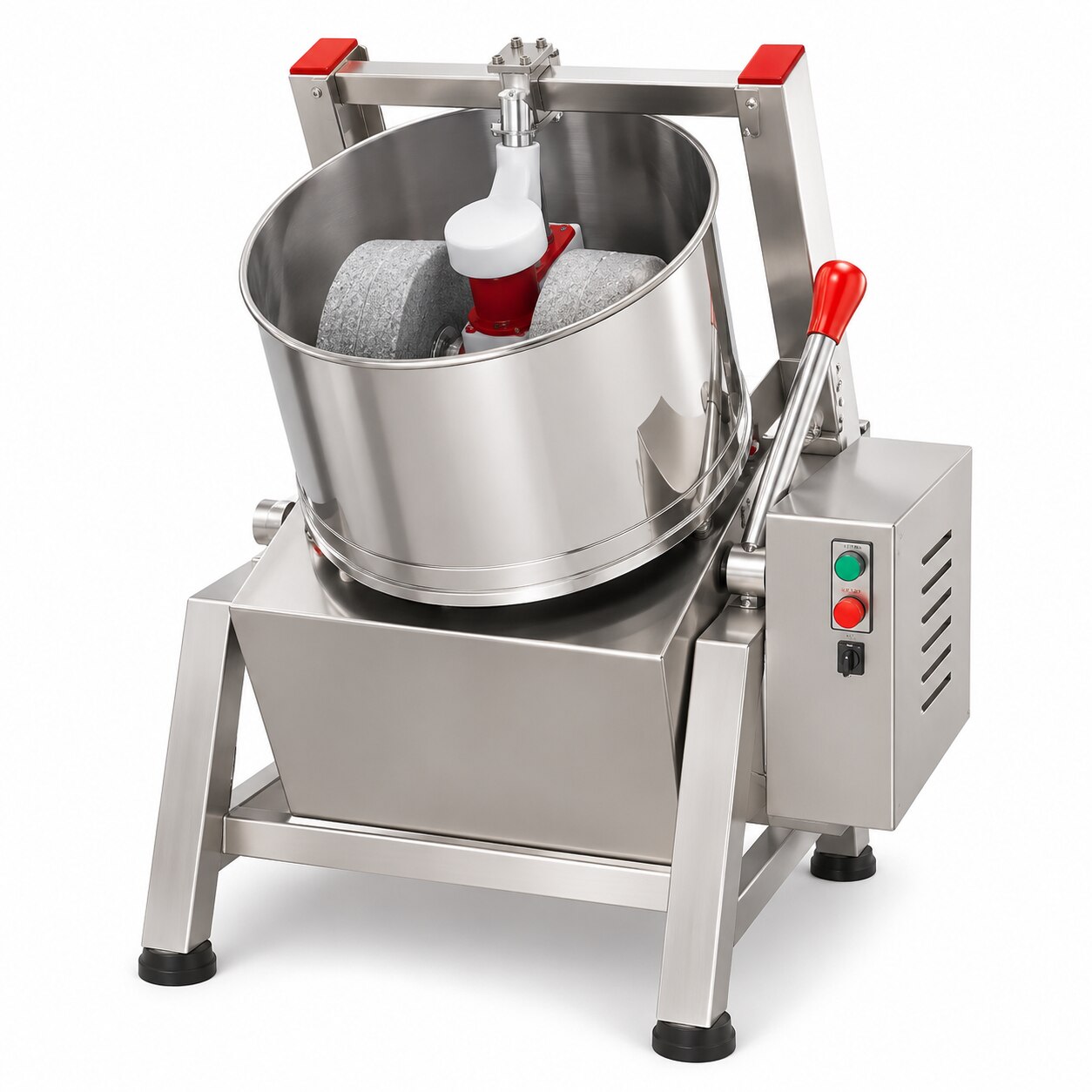
Tilting must fit the room, not just the brochure. Verify discharge height, vessel clearance, actual emptying angle and safe scraping access that keeps the operator away from moving parts. A machine that accepts the load but overheats, discharges slowly or leaves batter trapped is undersized in operational terms.
One large batch reduces loading and cleaning frequency. Several smaller batches can improve freshness and suit a menu with different batters, but each batch adds handling time. At breakfast peak, waiting for one long cycle can create a queue even when the daily litre total appears adequate.
When are several smaller batches better than one large batch?
Several smaller batches are better when demand arrives in sharp peaks, recipes change during the day, or the kitchen cannot hold one large volume safely. A machine sized for overnight production may make the next day’s batter in one or two cycles, yet sit idle during service.
A kitchen making fresh batter morning and afternoon should calculate each window separately, including grinding, cooling, storage and fermentation space.
| Choice | Main advantage | Main cost or risk |
|---|---|---|
| Several smaller batches | Fresher product and easier recipe changes | More loading, handling, discharge and cleaning events |
| One large batch | Fewer repeated production tasks | Longer waiting time and greater storage, fermentation and failure risk |
Smaller batches reduce the time one load waits before use. A large batch lowers repeated tasks but creates a single point of failure and may exceed safe storage or fermentation capacity.
If the same wet grinder for food businesses handles idli/dosa batter, vada batter, chutney or masala, obtain a written cleaning procedure and assess flavour cross-contact. Inspect shaft seals, stone mounts, welds, outlet areas and the underside of the tilting bowl for batter traps. FSSAI hygiene responsibilities cover cleanable equipment, contamination prevention and hygienic operations.
Therefore, commercial wet grinder capacity cannot be separated from sanitation: choose equipment operators can inspect, clean and return to service between batches.
What should you document before ordering a commercial tilting wet grinder?
Start with the output your operators must verify, not the drum label. A commercial wet grinder capacity stated only in litres cannot tell you whether the machine suits your batter, power supply or cleaning routine.
1. Write kilograms of soaked grain per batch, litres of finished batter per batch, batches per hour at the target texture, and minutes from loading to cleaned-and-ready status. State the recipe, water ratio and acceptable texture beside each figure.
2. Require separate values for gross bowl volume, maximum ingredient load, usable batch volume and minimum batch volume. Headspace changes with viscosity and soaked-grain volume, so a nominal 20-litre vessel is not automatically a 20-litre working batch.
3. Record rated voltage, phase, full-load current, duty rating, overload protection and required upstream electrical protection. Litre capacity does not prove motor suitability; two 20-litre machines can have different motors, stones, loads and duty cycles.
4. Measure bowl access, discharge height, cleaning access and the space required when tilted. For a commercial tilting wet grinder Karnataka kitchen, these dimensions decide whether staff can scrape safely and wash the underside.
5. Ask suppliers in Coimbatore or elsewhere for a recipe-specific commissioning test. Record grinding time, current or overload events, product temperature, discharge time and clean-down time instead of accepting “heavy duty” wording. SAHITH ENGINEERING belongs in the comparison only when it supplies these measurable figures.
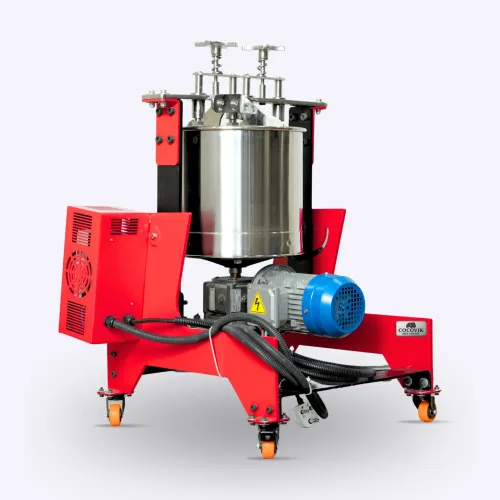
Do not assume the same grinder suits cocoa or chocolate: those processes need fat-compatible materials, thermal control, particle-size targets and changeover sanitation. Finalise size after checking peak demand, minimum useful load, storage, operator time, power supply and cleaning procedure.
Related products
 | Tilting Wet Grinder Tilting Wet Grinder Mnufacturers 🔹 Tilting Wet Grinder 20 Litres – Commercial Wet Grinder Machine We are a leading manufacturer and supplier of tilting wet grinder machines in... View product → |
 | Tilting Wet Grinder Tilting Wet Grinder Manufacturers In Coimbatore 🔹 Tilting Wet Grinder 5 Litres – Commercial Wet Grinder Machine We are a leading manufacturer and supplier of tilting wet grinder machines in... View product → |
Frequently asked questions
How do you calculate grinder capacity from Karnataka meal demand?
Estimate the busiest preparation-window demand in finished batter litres, then divide it by the machine’s usable batch volume. Allow for the number of complete batches you can finish before service and confirm whether the stated capacity refers to ingredients or finished batter.
What size suits a darshini, hotel, caterer or central kitchen?
Match the grinder to peak batter demand, available preparation time, recipe mix, and the number of batches your staff can complete. A darshini may prioritise quick turnover, while a caterer or central kitchen must also account for dispatch schedules and separate recipes.
What does a 20-litre tilting wet grinder actually handle?
Do not assume 20 litres means 20 litres of finished batter. Check the manufacturer’s rated load, usable batch volume, ingredient-to-batter yield, recipe limits, and batch time before calculating output.
When are several smaller batches better than one large batch?
Use smaller batches when you need different batter recipes, fresher production, easier cleaning between products, staff flexibility, or backup if one machine stops. Compare the extra labour and preparation time with the risk of relying on one large machine.
What should you document before ordering a commercial tilting wet grinder?
Record peak batter demand, recipes, batch weights, required preparation time, available power supply, floor space, discharge height, cleaning method, operator count, service access, warranty terms, and the manufacturer’s capacity definition.
Related products
 | Tilting Wet Grinders 10 Liter Tilting Wet Grinder – Commercial Wet Grinder Machine 10 Litre Tilting Wet Grinder Manufacturer in Coimbatore We are a leading manufacturer and supplier of 10 litre tilting wet grinder machines in... View product → |
 | Tilting Wet Grinder Tilting Wet Grinder Exporters In India 🔹 Tilting Wet Grinder (5 Litres) – Commercial Wet Grinder Machine We are a leading manufacturer and tilting wet grinder exporters in India, based in... View product → |
 | Tilting Wet Grinders Manufacturers 30 Liter Tilting Wet Grinder – Commercial Wet Grinder Machine 30 Litre Tilting Wet Grinder Manufacturer in Coimbatore We are a leading manufacturer and supplier of 30 litre tilting wet grinder machines in... View product → |
 | Commercial Tilting Wet Grinder Commercial Tilting Wet Grinder 20 Litres – Wet Grinder Machine 20 Litre Tilting Wet Grinder Manufacturer in Coimbatore We are a leading manufacturer and supplier of commercial tilting wet grinder machines in... View product → |
Keywords