

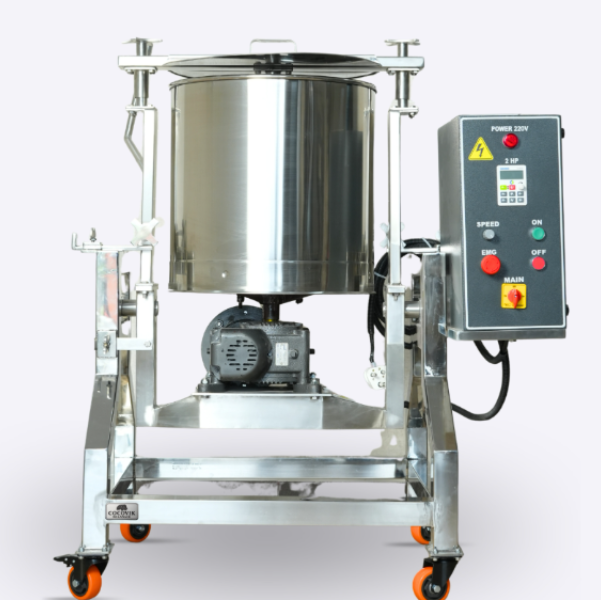
Chocolate makers depend on melangers to refine cocoa nibs and other ingredients while developing a smooth, balanced chocolate mass. Although machines may appear similar from the outside, their bowl geometry, stone arrangement, drive system, temperature behaviour, and construction quality can influence processing consistency.
Understanding these manufacturing features helps artisan chocolate brands, bakeries, confectioners, and food processing units evaluate equipment beyond basic capacity claims.
Stone and Bowl Design
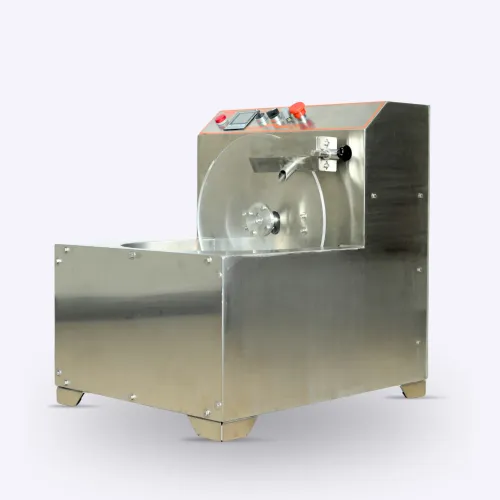
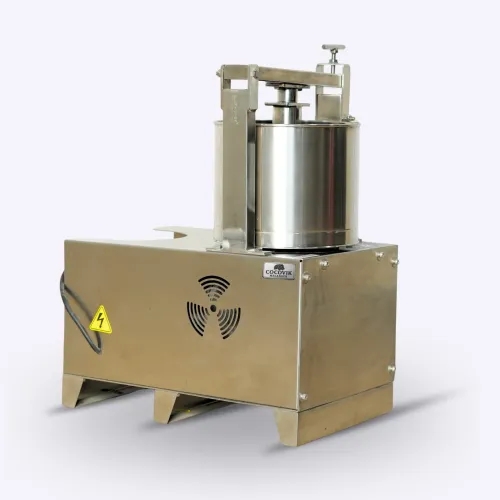
Chocolate melangers commonly use stone rollers moving against a stone base. The contact and movement help reduce particle size while mixing cocoa components with sugar and other recipe ingredients.
Important design considerations include:
- Roller weight and alignment
- Contact between rollers and base
- Bowl diameter and depth
- Scraper position
- Ingredient circulation
- Ease of lifting or adjusting the roller assembly
Ingredients should circulate through the refining zone instead of collecting around the sides or beneath poorly positioned scrapers.
Capacity Versus Working Load
A bowl’s physical volume is not necessarily its recommended chocolate capacity. Adequate space is needed for movement, aeration, and safe processing.
Chocolate makers should distinguish between:
- Maximum bowl volume
- Recommended starting load
- Practical refining load
- Minimum quantity required for effective circulation
Recipe composition also matters. A dark chocolate formulation may behave differently from milk chocolate, nut-based spreads, or other refined products.
Motor and Transmission Requirements
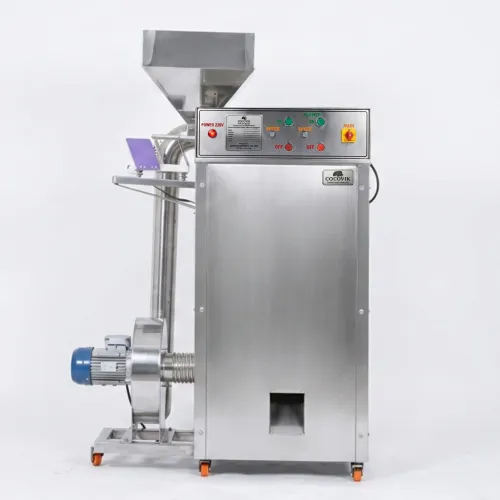
Melanging may continue for many hours, so the motor and drive components need to suit extended operation. The transmission should deliver stable movement without excessive heat, noise, or vibration.
Questions for the manufacturer should cover motor rating, electrical phase, overload protection, belt or gearbox arrangement, bearing accessibility, and the recommended duty cycle.
For production units in Coimbatore, the available electrical infrastructure and operating environment should be assessed before installation.
Temperature Behaviour During Refining
Friction creates heat during processing. Some warmth can help cocoa butter flow, but uncontrolled temperature may affect flavour development or create inconsistency.
The machine should allow the operator to monitor the chocolate mass and manage heat according to the recipe. Ambient temperature, batch size, refining time, and ingredient sequence all influence the result.
A melanger should not be evaluated on speed alone. Chocolate production often requires a controlled process that balances particle reduction, flavour development, and viscosity.
Food-Contact Construction
Food-contact parts should use suitable materials with smooth, cleanable surfaces. Stainless steel is commonly preferred for bowls and related components because of its durability and hygiene characteristics.
Buyers should inspect weld quality, surface finishing, scraper material, shaft sealing, and areas where chocolate could collect. Equipment that is difficult to clean can create flavour carryover between batches.
Practical Discharge and Cleaning
Finished chocolate can be viscous, so bowl access and discharge design affect labour requirements. Operators need a practical way to remove the product without excessive scooping or avoidable loss.
If the bowl tilts or can be removed, the mechanism should remain stable and safe at the working load. Components requiring cleaning should be accessible without complicated dismantling.
Customisation for Different Producers
Chocolate melanger manufacturing should respond to the scale and recipe needs of the buyer. A startup producing small origin-specific batches may value flexibility, while an expanding manufacturer may prioritise longer operating cycles and repeatable volume.
Sahith Engineering works with commercial food and chocolate-processing machinery. A productive equipment discussion should include the intended recipes, batch quantity, refining duration, ingredient sequence, desired texture, electrical supply, and production-growth plan.
Well-designed manufacturing features do not replace good chocolate-making practices, but they create a more dependable production platform. Buyers who examine circulation, temperature, cleaning, motor suitability, and working capacity are better positioned to achieve consistent batches.