A kilogram rating alone cannot tell you whether a melangeur will refine your recipe, start reliably, or fit your electrical supply. By checking capacity definitions, refining results, component design, controls, operating limits and supplier test evidence, you can compare machines on production performance rather than brochure claims.
Key takeaways
- Compare usable working batch mass, not gross bowl volume.
- Match stone or roller geometry and motor power to your target texture.
- Set temperature, speed, loading and cleaning limits before requesting quotes.
- Run the same recipe in a witnessed trial before ordering.
Define the real batch capacity before comparing machines
The figure that tells you whether a machine suits your recipes is its usable working batch mass for chocolate mass—not its gross bowl volume or headline maximum capacity.
1. Ask the supplier whether the quoted kilograms mean roasted nib input, cocoa liquor output, chocolate-mass batch size or finished chocolate throughput. These are different process stages and cannot be compared directly.
2. Request the minimum recommended load, normal working load and maximum continuous load separately. A machine advertised as 50 kg may require 35 kg to keep the wheels engaged, while its safe working load may be below 50 kg after allowing for wheel displacement, freeboard, heating expansion and safe loading.
3. Compare those figures with your smallest and largest recipes. A bowl that needs to be nearly full will leave poor wheel contact, uneven mixing and wasted ingredients on small batches, even if its maximum rating looks suitable.
The chocolate grinder machine specifications should state working volume or working mass separately from gross bowl volume. Also ask whether the rating applies to a complete chocolate mass containing sugar, cocoa solids and cocoa butter; a motor that starts an empty bowl can trip when starting a cold, high-viscosity load.
For a commercial chocolate grinder, use maximum continuous batch capacity as the main comparison figure, then check minimum load and expected processing time. Do not treat a nominal 4 kg, 50 kg or 80 kg vessel rating as usable capacity without the supplier’s loading limits.
Match the grinding assembly and motor to the result you need
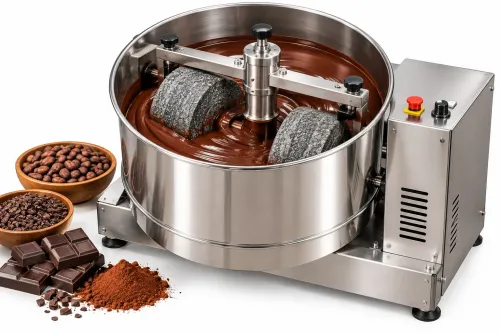
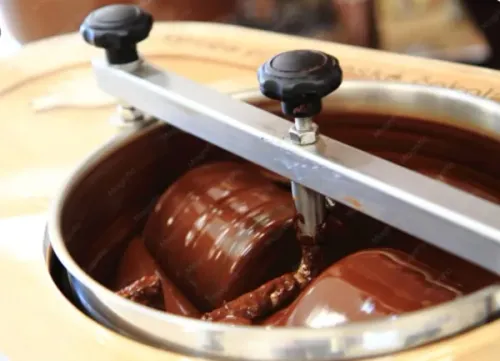
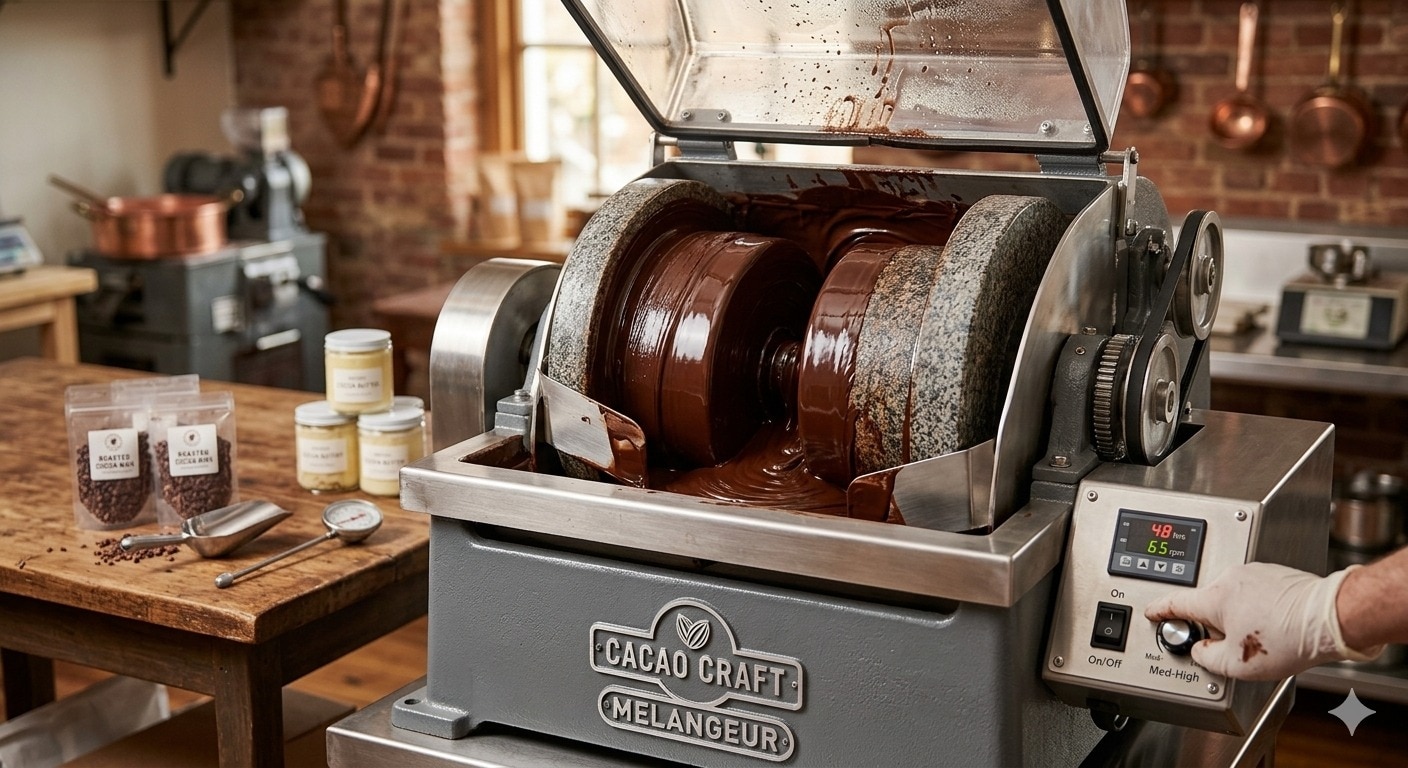
Refining quality comes from the grinding assembly and formulation, not motor horsepower alone. Wheel material, diameter, weight, wheel-to-bowl geometry and scraper pressure determine how efficiently the mass is sheared and moved. Two machines with identical motor ratings can deliver different particle sizes, processing times and heat loads.
| Component or measure | What to verify | Effect on refining |
|---|---|---|
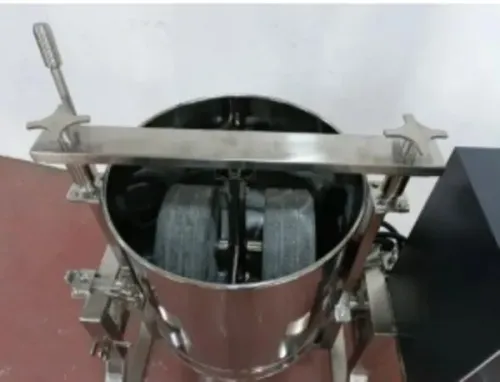
| Wheel and vessel | Granite or stone material, wheel diameter and weight, bowl finish | Controls grinding contact, texture and wear |
| Geometry and scraper | Wheel clearance, scraper position and shaft alignment | Prevents dead zones and uneven refining |
| Drive system | Motor duty rating, belt or gearbox, bearings, overload protection and cold-load starting current | Prevents trips when cooled, high-viscosity chocolate starts |
| Speed control | Rotational speed and usable speed range under load | Balances throughput, texture and heat generation |
| Quality result | D90 target, test method and sample preparation | Proves fineness instead of relying on “fine grinding” |
Require a witnessed trial using your formulation and a fixed acceptance target, such as D90 below 25–30 micrometres. A laser-diffraction result and a micrometre fineness-gauge reading are not interchangeable, so specify one method before testing.
Before approving a chocolate melangeur machine or commercial chocolate grinder, request:
- Motor power, current draw, voltage, phase, frequency, earthing and permissible voltage variation on the nameplate
- Confirmation that the electrical rating includes heaters, pumps and controls, not only the drive motor
- Wheel, scraper, bearing and seal replacement availability
- Noise level, emergency-stop function and refining time at the tested load
Check temperature, speed control and process boundaries
A heating element does not prove controlled chocolate processing. Match the machine’s temperature range to each recipe, because a setting that keeps dark chocolate fluid can scorch milk chocolate, separate fat in white chocolate, or drive off moisture.
1. Specify the permitted product-temperature range, not just “heating available.” Ask whether the bowl is jacketed or air-cooled, where the sensor sits, the alarm set points, and the cooling capacity at your actual ambient temperature. A conventional stone melanger can generate substantial frictional heat without closed-loop control.
2. Require an adjustable speed range in the chocolate melangeur machine. Lower speed can limit heat during melting or holding; higher speed can increase shear, friction and refining action. Confirm which speeds apply to loading, refining, conching and discharge, rather than accepting one maximum rpm.
3. Define the process boundaries in writing. State whether the machine is intended for nib grinding, liquor processing, chocolate refining, conching or only mixing. Ask for minimum and maximum working loads, because a machine that performs at a full bowl may scrape poorly or heat unevenly with a small recipe.
4. Read the chocolate grinder machine specifications for electrical limits as well as mechanical speed. Verify site voltage, phase, frequency, earthing, permissible voltage variation and total current draw; check whether the rating includes heaters, pumps and controls or only the motor. Otherwise, a suitable process machine can still fail at installation.
Specify loading, cleaning and maintenance requirements
Approve the design only after you can describe how an operator will load, run, clean and service it without unsafe lifting, contamination or avoidable downtime.
1. Request chocolate grinder machine specifications showing gross bowl volume separately from working mass. Confirm minimum and maximum batch loads, freeboard, wheel displacement and expansion space; a nominal 50 kg bowl may not accept 50 kg of chocolate.
2. Check the actual nameplate voltage, phase, frequency, earthing arrangement and permissible voltage variation against your site supply. Ask whether the quoted electrical rating includes heaters, pumps and controls, or only the drive motor.
3. Confirm that the motor starts a cold, high-viscosity batch without repeated trips. Obtain the duty rating, overload protection, start-up current, noise level, belt or gearbox servicing intervals, and replacement lead times for wheels, scrapers, bearings and seals.
4. Specify food-contact surfaces, removable scrapers, lid access, drain or discharge design and cleaning instructions. Reject crevices, trapped-product zones and components that cannot be inspected; require the cleaning agent, rinse method, drying procedure and allergen changeover steps.
5. Document lubrication points, lubricant grade, bearing access, belt tension checks and emergency-stop testing. Verify whether maintenance requires lifting equipment or dismantling the bowl.
Record every limit in the purchase specification, including controlled temperature range and safe loading sequence. “Heating available” does not prove stable processing or prevent scorching, fat separation or moisture loss.
Use a witnessed trial to compare the supplier’s claims
A supplier’s demonstration proves nothing unless it uses your recipe and records measurable results. Require a witnessed trial with your actual cocoa, sugar particle size, fat content and intended batch size; a substitute with lower viscosity is not equivalent.
Ask the cocoa grinding machine supplier to record:
- Loading sequence, ingredient weights and working mass, not merely the bowl’s gross volume
- Time to reach the agreed particle-size target, product temperature and energy consumed
- Starting weight, finished weight and yield loss, including material retained on stones, scraper and vessel
- Cleaning time, remaining residue and the labour or tools required
Use a comparison record that separates claims from proof:
| Evidence | Acceptable proof | Reject |
|---|---|---|
| Capacity | Roasted nib input, liquor output, chocolate-mass batch size or finished throughput stated separately | “50 kg capacity” with no process stage |
| Refining | D90 below 25–30 micrometres, with a fixed sample method and instrument | “Fine grinding” without data |
| Electrical load | Nameplate voltage, phase, frequency, current and total rating including heaters and controls | Motor power alone |
| Usability | Minimum and maximum working load, temperature, time, yield and cleaning results | Short demonstration at an undisclosed load |
Laser diffraction and a micrometre fineness gauge are not interchangeable. A chocolate grinder melangeur machine in Coimbatore must also be tested as a wet refiner and mixer, not assumed to replace a nib mill. Ask SAHITH ENGINEERING to place these acceptance figures in the quotation before you approve the order.
Related products
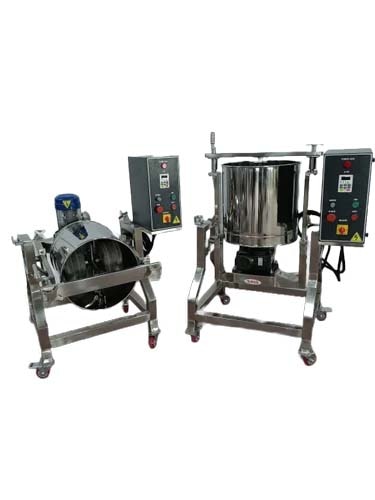 | Chocolate Grinder Chocolate Melanger Chocolate Grinder / Chocolate Melangeur Machine – Cocoa Grinding Machine 🔹 Chocolate Melangeur Manufacturer in Coimbatore We are a leading manufacturer and supplier of chocolate grinder and chocolate melangeur machines in... View product → |
 | Chocolate Refiner 🔹 Chocolate Table Top Melanger – 4 Kg Chocolate Grinding Machine We are a leading manufacturer and supplier of chocolate table top melanger machines... View product → |
Frequently asked questions
How do you define the real batch capacity of a chocolate melangeur?
Use the usable working batch mass for chocolate mass at your recipe’s minimum and maximum load. Do not compare gross bowl volume or headline maximum capacity alone.
Which grinding assembly and motor specifications matter?
Check the grinding surface type, diameter, contact area, adjustment method, motor power, drive arrangement and expected particle-size result against your recipe.
What temperature and speed controls should you specify?
Specify the operating temperature range, temperature measurement point, heating or cooling arrangement, speed range, adjustment method and process limits for your chocolate mass.
What loading, cleaning and maintenance details should you confirm?
Ask how ingredients are loaded, which parts can be removed, how residues are cleared, what food-contact materials are used and which wear parts require scheduled replacement.
Why conduct a witnessed trial before ordering a commercial chocolate grinder?
A witnessed trial lets you compare throughput, texture, temperature rise, power use, cleaning time and final product quality using your own recipe and target batch.
Related products
 | Chocolate Grinder Chocolate Melanger Chocolate Melanger / Cocoa Grinding Machine – Chocolate Making Machine 🔹 Chocolate Melanger Manufacturer in Coimbatore We are a leading manufacturer and supplier of chocolate melanger and cocoa grinding machines in... View product → |
 | Chocolate Grinder Chocolate Melanger Chocolate Melanger with Speed Controller – 50 Kg Chocolate Grinding Machine 🔹 Chocolate Melanger Manufacturer in Coimbatore We are a leading manufacturer and supplier of chocolate melanger machines with speed controller in... View product → |
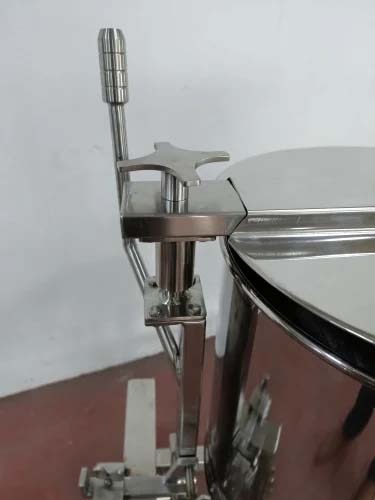 | Cocoa Grinding Machine or Chocolate Melanger Chocolate Melanger Machine – Chocolate Grinding Machine Chocolate Melanger Manufacturer in Coimbatore We are a leading manufacturer and supplier of chocolate melanger machines in Coimbatore, Tamil Nadu,... View product → |
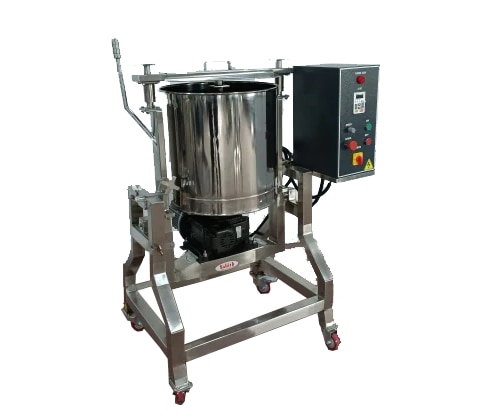 | Chocolate Machine Manufacturers Sahith Chocolate Melanger / Nut Butter Grinder – Cocoa Grinding Machine Chocolate Melanger & Nut Butter Grinder Manufacturer in Coimbatore We are a leading manufacturer and supplier of chocolate melanger and nut butter... View product → |
Keywords