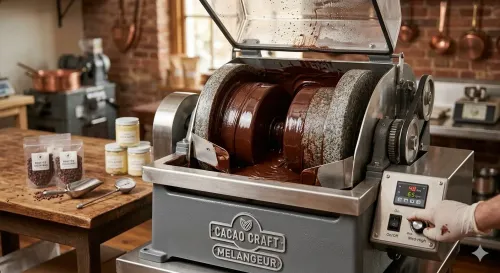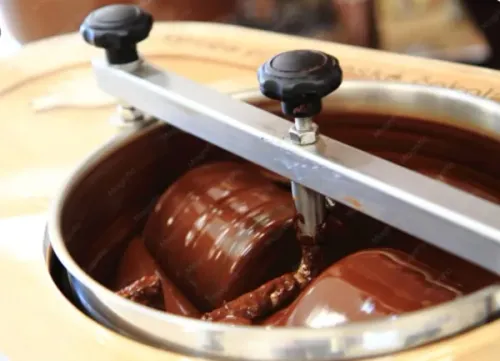
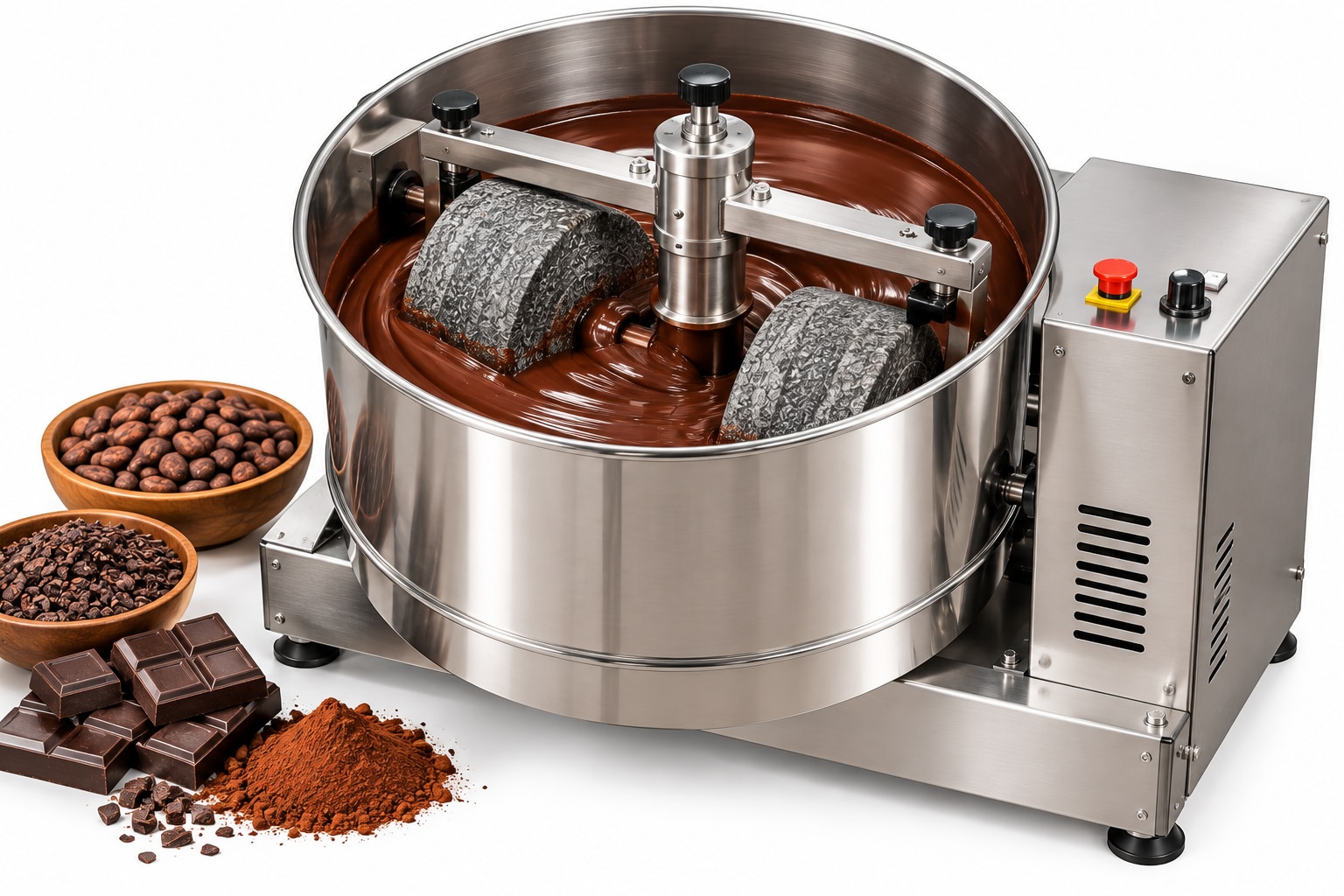
A melanger that stalls, overheats, leaks, vibrates, or produces gritty chocolate can have an ingredient, operating, electrical, or mechanical fault. By the end, you will have a safe diagnostic sequence, measurable operating checks, and a buying and service checklist for deciding whether to adjust the batch, stop the machine, or call a technician.
Key takeaways
- Isolate electrical power before clearing a jam or inspecting rotating parts.
- Separate recipe faults from machine faults by testing a controlled batch.
- Check stone clearance, belt tension, heat, seals, vibration and grit together.
- Match melanger capacity, cleaning needs and local service support to your output.
What should you check before restarting a jammed melanger?
Keep the melanger stopped until you isolate electrical power at the switch and confirm that the drive cannot start. Never reach into rotating parts. Allow hot chocolate to cool before cleaning, and get assistance before lifting heavy stones.
1. Record the fault before changing anything: batch mass, product temperature at several points, motor current, ambient temperature, relative humidity, supply voltage, refining time, trip history, and the exact conditions at the attempted restart. Photograph the jam, control panel, and motor nameplate.
2. Keep the machine stopped and call a qualified technician for repeated overload trips, smoke, exposed wiring, a burning odour, shaft seizure, or unusual bearing noise. Preserve a failed belt or damaged part instead of discarding it; it can reveal the cause.
3. If there is no danger signal, isolate power, remove some load, and clear only a visible obstruction with suitable tools. Do not loosen stones or scrape trapped ingredients while power is connected.
4. Inspect in this order: foreign material, excessive charge, tight stone pressure, belt damage or slip, bearing resistance, and electrical supply. Check these before adjusting the grinding gap; excessive pressure can damage the drive.
5. With the machine empty and safe, check belt tracking, stone movement, and bearing resistance. Restart only under the maker’s specified conditions, then stop immediately if current rises or the fault returns.
This chocolate grinding machine troubleshooting sequence helps separate chocolate melanger problems in Coimbatore from unsafe mechanical or electrical faults. Keep the complete record for service diagnosis.
How can you separate a recipe problem from a machine problem?
A recipe fault changes with the ingredients or settings; a machine fault remains when a verified recipe runs at the same load. Separate them with a controlled trial that changes one variable at a time.
1. Record batch mass, cocoa nib or cocoa powder moisture, ambient temperature, relative humidity, batch temperature, motor current, refining time, stone gap, and speed. Warm, humid Coimbatore air can let sugar and cocoa solids absorb moisture, creating a stiff paste that resembles a seized machine.
2. Confirm the formulation and change only one factor: sugar crystal size, cocoa-butter percentage, lecithin level, batch temperature, loading order, or total batch size. These alter viscosity, motor load, refining time, and heat. An excessive charge can overload a sound drive.
3. Start with cocoa butter or cocoa liquor, then add sugar and cocoa powder gradually while the mass remains mobile. Do not add water to thin it; hydrated sugar and cocoa solids can seize into a stiff paste.
4. Compare product types separately. Dark chocolate carries more cocoa solids, while milk and white chocolate contain milk solids and often more sugar, so each needs its own charge, pressure, temperature, and refining-time test.
5. For a thick or stalled batch, stop safely, verify the recipe, and use the chocolate melanger machine solution of adding only an approved fat in measured increments. Retest with the same mass and settings; improvement points to formulation.
For reliable chocolate melanger troubleshooting in Coimbatore, record every trial. Refining and conching do not temper chocolate: mould-ready product still requires controlled tempering.
How do you correct stones, belts, heat, noise, leaks, vibration, and grit?
For chocolate grinding machine troubleshooting, diagnose the load path before narrowing the gap. In chocolate melanger problems in Coimbatore, warm conditions can hide heat-related faults; do not restart until the cause is identified and the product is safe.
| Fault | Checks | Corrective action |
|---|---|---|
| Seized stones or stalled motor | Check batch overload, dry powder beneath stones, foreign material, bearing contamination, excessive pressure, and motor current. | Remove the obstruction, reduce load or pressure, and inspect the bearing before restarting. |
| Belt slip | Check tension, pulley alignment, oil contamination, and overload. | Clean or replace the belt and correct alignment; tightening alone can damage the drive. |
| Overheating | Measure chocolate at several points in the mass and again after stopping. Compare readings with the product-specific maximum. | Use staged cooling or rest periods instead of continuous running. |
| Noise or vibration | Inspect stone parallelism, bearing play, shaft runout, scraper alignment, and loose fasteners. | Correct the mechanical fault before narrowing the grinding gap. |
| Leak | Locate the source: seal, shaft area, bowl joint, or drainage point. | Repair it and keep contaminated chocolate out of sale. |
| Chocolate sticking | Check fat percentage, temperature, scraper contact, and dry loading. | Correct the recipe or loading sequence and restore scraper contact. |
| Grit | Use a micrometre or grindometer, not taste alone. | Target about 15–25 micrometres; particles near 30 micrometres or above often taste sandy. |
Which operating, cleaning, maintenance, and site checks prevent repeat faults?
Start and stop discipline prevents many repeat faults. Start empty only when the maker permits it; introduce a mobile fat phase such as cocoa butter or cocoa liquor, then add solids gradually. Stop by removing the load or following the specified unloading sequence, never by abruptly shocking a full drive.
| Interval | Checks | Action |
|---|---|---|
| Each batch | Chocolate and motor temperature, motor current | Record readings against product limits |
| Weekly | Belt tension, scraper wear, stone alignment, bearing condition | Correct wear, rubbing, looseness, or drag |
| Scheduled | Bearings and lubrication points | Lubricate only at defined points; keep lubricant off food-contact surfaces |
At every changeover, scrape cocoa fat from the bowl and dry-clean loose residue. Remove stones safely, then inspect seals, scraper slots, and shaft areas; trapped residue in these spaces causes contamination and drag. Where wet cleaning is required, wash, rinse, sanitise where appropriate, and dry every part completely before loading ingredients.
Nut-butter production needs documented allergen separation, including dedicated or validated-clean tools and batch records.
Check the nameplate against the supply: voltage, phase, frequency, earth continuity, overload protection, plug type, and phase sequence where applicable. Confirm ventilation and ambient heat. A 230 V single-phase motor is not interchangeable with a 415 V three-phase unit, even in artisan chocolate equipment in Tamil Nadu.
Keep replacement records for belts, bearings, scrapers, seals, and stones. After every jam or repair, complete a restart test at low load and record the result.
Which melanger, alternative machine, and service arrangement fits your production?
Do not size a melanger by the label on its lid: a 4 kg or 5 kg nominal bowl may deliver less usable chocolate after allowing room for circulation. Compare the figures that determine output, not advertised capacity.
| Option | Usable capacity and turnaround | Engineering and site checks |
|---|---|---|
| 4 kg table-top | Smaller batches; suit occasional production and recipe trials | Confirm stone diameter and weight, motor rating, speed control, bowl material, scraper contact, noise, drainage, heat control, wash-down access, and available 230 V supply |
| 5 kg mini | Slightly more output; suit regular small-batch production | Compare actual batch time, motor current, workspace, ventilation, belt access, and lifting effort—not bowl volume alone |
| Larger equipment | Better for frequent or high-volume batches; verify loading, unloading, and cleaning time | Check power phase, footprint, stone mass, drainage, noise, cooling, service access, and whether the floor supports it |
A melanger is the wrong choice for continuous production, rapid particle-size reduction, or mould-ready chocolate requiring integrated controlled tempering. Consider a ball mill, refiner, conche, high-shear mixer, or separate tempering machine instead.
For artisan chocolate equipment in Tamil Nadu, demand an acceptance test using a stated batch mass, ingredient moisture condition, target particle size, maximum chocolate temperature, maximum motor current, refining time, and cleaning inspection. Record ambient temperature and relative humidity during chocolate melanger troubleshooting in Coimbatore.
Request commissioning, operator training, installation requirements, warranty exclusions, spare-parts stock, technician response across Coimbatore and Tamil Nadu, and service documentation. A chocolate melanger machine solution is credible only when SAHITH ENGINEERING demonstrates your recipe and records those figures, rather than promising consistency.
Related products
 | Chocolate Grinder Chocolate Melanger Chocolate Melanger / Cocoa Grinding Machine – Chocolate Making Machine 🔹 Chocolate Melanger Manufacturer in Coimbatore We are a leading manufacturer and supplier of chocolate melanger and cocoa grinding machines in... View product → |
 | Cocoa Grinding Machine or Chocolate Melanger Chocolate Melanger Machine – Chocolate Grinding Machine Chocolate Melanger Manufacturer in Coimbatore We are a leading manufacturer and supplier of chocolate melanger machines in Coimbatore, Tamil Nadu,... View product → |
Frequently asked questions
What should you check before restarting a jammed chocolate melanger?
Switch off and isolate electrical power, verify that the drive cannot start, and wait for hot chocolate to cool. Remove the obstruction only with safe tools, never your hands, and get help before lifting heavy stones. Inspect the stones, bowl, scraper, belt and motor before restarting at low load.
How can you separate a recipe problem from a machine problem?
Run a controlled test with weighed ingredients, known particle size and the same operating time. A recipe fault follows the ingredients or ratios; a machine fault remains when you change the batch while abnormal noise, heat, vibration, poor stone contact or drive slipping continues.
How do you correct grit, overheating, noise, leaks and vibration?
Check for damaged stones, trapped particles, loose fasteners, incorrect stone clearance, a slipping or misaligned belt, blocked ventilation, worn seals and an uneven installation surface. Stop the machine if noise, heat, leakage or vibration increases, then identify the failed part before adjusting the recipe.
Which operating and maintenance checks prevent repeat melanger faults?
Keep the melanger within its rated batch size, add ingredients gradually, record batch time and temperature, clean without flooding the motor or bearings, inspect belts and seals, tighten accessible fasteners, and keep the machine level on a stable floor.
When should you choose another machine or a service arrangement?
Choose another grinder when your required throughput, particle-size target, cleaning cycle or product viscosity exceeds the melanger’s practical limits. Compare capacity, motor protection, stone replacement, spare-parts access and response time for service in Coimbatore or elsewhere in Tamil Nadu.
Related products
 | Chocolate Refiner 🔹 Chocolate Table Top Melanger – 4 Kg Chocolate Grinding Machine We are a leading manufacturer and supplier of chocolate table top melanger machines... View product → |
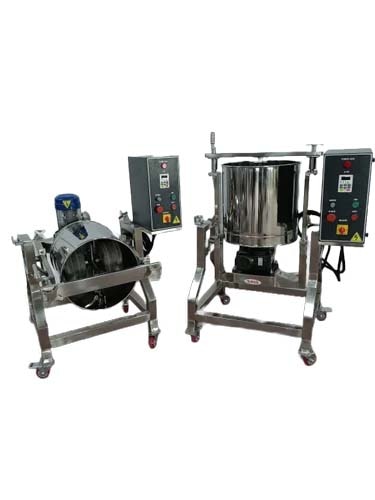 | Chocolate Grinder Chocolate Melanger Chocolate Grinder / Chocolate Melangeur Machine – Cocoa Grinding Machine 🔹 Chocolate Melangeur Manufacturer in Coimbatore We are a leading manufacturer and supplier of chocolate grinder and chocolate melangeur machines in... View product → |
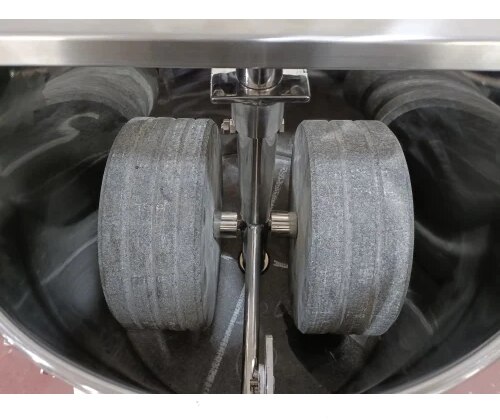 | Chocolate Machine Manufacturers Standard Chocolate Melanger Machine – Chocolate Grinding Machine Chocolate Melanger Manufacturer in Coimbatore We are a leading manufacturer and supplier of standard chocolate melanger machines in Coimbatore, Tamil... View product → |
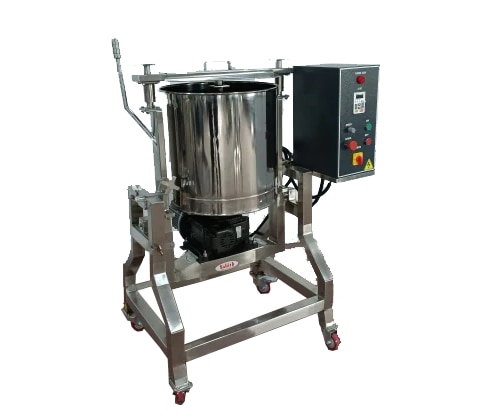 | Chocolate Machine Manufacturers Sahith Chocolate Melanger / Nut Butter Grinder – Cocoa Grinding Machine Chocolate Melanger & Nut Butter Grinder Manufacturer in Coimbatore We are a leading manufacturer and supplier of chocolate melanger and nut butter... View product → |
Keywords