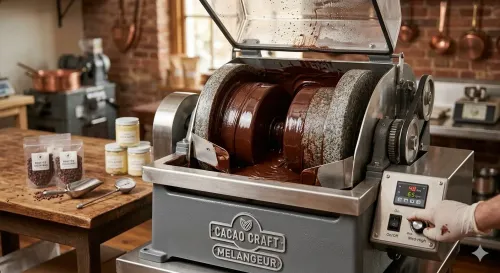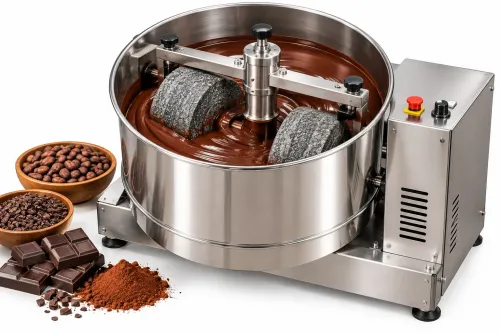
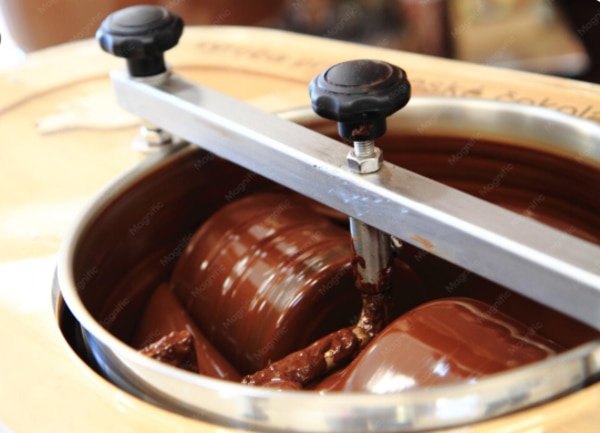
A tilting wet grinder can help a chocolate business recover viscous chocolate mass faster, reduce scraping and simplify batch handling, but bowl capacity alone does not prove suitability. By the end, you will know how to map the machine to your chocolate workflow, compare it with other refiners, calculate usable output and specify a meaningful factory test.
Key takeaways
- Confirm whether the bowl pivots, the outlet opens, or both actions discharge chocolate.
- Match grinder capacity to batch size, transfer losses, cleaning time, and operating temperature.
- Use a grinder for refining and mixing, not as a substitute for tempering equipment.
- Demand food-contact materials, test-run records, service access, and documented electrical specifications.
What tilting changes in a chocolate wet grinder
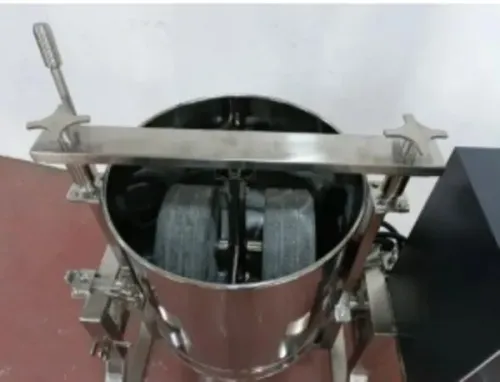
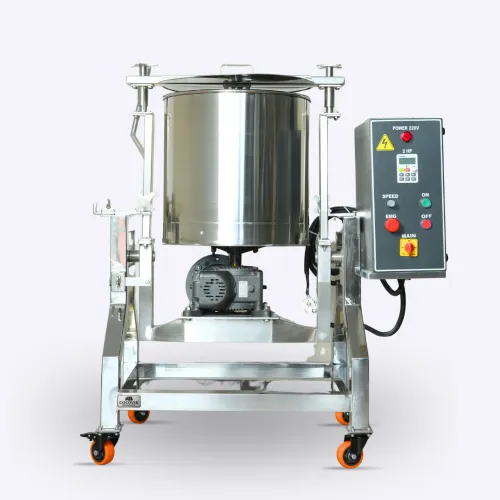
A tilting vessel empties viscous chocolate mass faster than a fixed bowl because gravity helps move cocoa butter, sugar and cocoa solids toward the discharge side. Tilting can describe the grinding vessel itself, the discharge arrangement, or both: confirm whether the complete bowl pivots, the outlet opens separately, or the design combines both.
This reduces product loss, manual scraping and operator exposure while handling hot, heavy chocolate.
Before choosing a tilting wet grinder in coimbatore, inspect:
- The bowl lip for ledges where mass can remain.
- The lowest point in the tilted position for a genuine flow path.
- The outlet diameter, position and shut-off arrangement.
- The seal for leakage, product trapping and replacement access.
- The hinge and locking mechanism for cleanability and safe support.
A tilting bowl is not automatically self-draining. A wet grinder for chocolate processing still needs a recovery check using your actual recipe, because thick mass can cling to surfaces instead of flowing.
Chocolate leaves a tenacious cocoa-butter and sugar film, so time the complete changeover rather than timing discharge alone. Scrape while the mass remains workable, then dismantle accessible parts, wash, dry fully and reassemble; check around shafts, stone mounts, seals and the tilt mechanism. Ask for the measured retained product and cleaning time before buying.
Where the machine fits in the chocolate workflow
A wet grinder for chocolate processing fits after roasting and winnowing, as a batch pre-refiner or paste-making machine—not as proof that the final chocolate meets a 20–30 micrometre particle target.
1. Roast the cocoa beans to the recipe’s flavour and moisture specification.
2. Crack and winnow the beans, then inspect the nibs. Remove visible shell; inadequately winnowed nibs increase abrasion and leave contamination in the mass.
3. Pre-grind the clean nibs into cocoa liquor. Whole beans are unsuitable for this stage because their shells and size obstruct consistent grinding.
4. Add cocoa liquor and enough fat for circulation, then introduce sugar in controlled stages. Cocoa nibs, liquor and sugar suit the machine; some nut-based pastes work under the same lubrication condition.
5. Refine the mass until the recipe reaches its required particle-size distribution. A glossy or visually smooth paste does not prove 20–30 micrometre particles.
6. Run a recipe-specific trial before adding milk powder, low-moisture fillings or hard inclusions. These materials can bridge the vessel, overload the drive, abrade grinding surfaces or remain coarse.
7. Conch the refined mass when the recipe requires flavour development and removal of unwanted volatiles. Grinding and conching are not interchangeable.
8. Discharge through the tilted vessel, checking the outlet and low points for retained chocolate.
9. Scrape, dismantle, wash, dry and reassemble before the next batch. Cocoa butter and sugar form a stubborn film around shafts, seals, stone mounts and the tilt mechanism.
How a tilting grinder compares with other chocolate equipment
Compare a tilting wet grinder with the complete refining line before buying: it is a batch pre-refiner or paste-making machine, not an automatic replacement for dedicated chocolate equipment.
| Option | What it does | Main trade-off |
|---|---|---|
| Tilting wet grinder | Disperses cocoa liquor, sugar and fat in batches | Flexible discharge, but verify 20–30 micrometre particle-size distribution |
| Stone melanger | Provides prolonged stone refining | Gentle, extended processing; slower and less tightly controlled |
| Five-roll refiner | Targets controlled particle reduction | Consistent refining, but requires additional handling and equipment |
| Ball mill | Provides intensive recirculating refinement | High refinement potential; demands careful load, temperature and media control |
| Colloid mill | Applies high-shear dispersion | Useful for dispersing; it is not a complete chocolate conche |
| Conche | Develops flavour and removes unwanted volatiles | Improves aroma, but does not replace grinding |
| Non-tilting wet grinder | Grinds in a fixed vessel | Often cheaper, but discharge, recovery and cleaning require more scraping |
Compare these specifications, not bowl volume alone:
- Batch and working capacity, stone or rotor material, target particle-size distribution, motor power, speed control and vessel angle
- Discharge height, heating control, seal design, cleaning access and every food-contact material
- Torque and low-speed current while processing your actual chocolate viscosity, not only rated kilowatts
Ask a commercial wet grinder manufacturer in Tamil Nadu for a formulation trial and retained sample. A machine proven on rice batter may stall, heat belts or leave coarse sugar in chocolate.
How to calculate usable output and control chocolate temperature
1. Calculate output from usable batch size, not bowl volume: usable batch size × completed batches per day. If a 4 kg grinder completes four batches, output is 16 kg per day; count loading, refining, discharge and changeover separately to establish the real cycle time.
2. Treat 4 kg and 5 kg machines as starting points for trials, recipe development and small retail batches. A nominal bowl is not working capacity: viscous chocolate needs free space to circulate, and filling to the rim can overload the drive.
Confirm larger commercial output only after testing the buyer’s cocoa, sugar, fat and intended batch size.
3. Put these figures in the specification: operating-temperature limit, sensor location, heat-removal method and maximum batch time.
Place the sensor in the chocolate near the grinding zone, not only in a jacket or motor housing; define cooling water, a jacket or another removal method, then set a numeric product limit, such as 50°C unless recipe validation requires lower.
4. Measure friction and shear because uncontrolled heat changes viscosity, aroma and later tempering behaviour. During acceptance testing, record temperature rise, particle size, electrical load, recovered product and finished mouthfeel; visual smoothness does not prove a 20–30 micrometre result.
5. Use the same test protocol when comparing a tilting wet grinder in Coimbatore with alternatives. Do not approve a machine from its label or rated kilograms per hour: approve it against completed batches, recovery, temperature and chocolate quality.
What to demand from a Coimbatore machine manufacturer
A local label proves nothing; your formulation proves suitability. Require a documented factory acceptance test (FAT) before purchase, using your cocoa, sugar, fat and planned batch size, then retain the finished sample for particle-size and sensory comparison against your approved chocolate.
- Record batch size, cycle time, temperature rise, particle-size distribution, product recovery and electrical load.
- Specify every food-contact material and confirm corrosion-resistant construction.
- Inspect welds, internal surface finish and crevice-free joints.
- Identify gasket material, seal access and the replacement procedure.
- Demand written scraping, washing, drying and reassembly instructions.
- Ask how the design controls stone or rotor wear particles and how grinding pressure is set reproducibly.
- Measure discharge height and retained product after tilting; product trapped around shafts, seals, mounts or the hinge counts as loss.
- Time the complete changeover, including dismantling and cleaning.
- Test safety interlocks, emergency stops and recorded running current at chocolate viscosity.
- Require the manufacturer to demonstrate the full discharge, not merely an empty-bowl tilt.
A tilting wet grinder manufacturer for chocolate business in Coimbatore can add value by changing bowl geometry, scraper reach, pressure adjustment, controls, discharge angle and cooling provisions around your recipe. A food processing machine manufacturer in Coimbatore or a commercial wet grinder manufacturer in Tamil Nadu is suitable only after this evidence.
Rice, lentil or coconut demonstrations cannot replace a chocolate trial because their flow and lubrication differ. SAHITH ENGINEERING should be assessed against the same formulation-based acceptance record, not its location or product label.
Related products
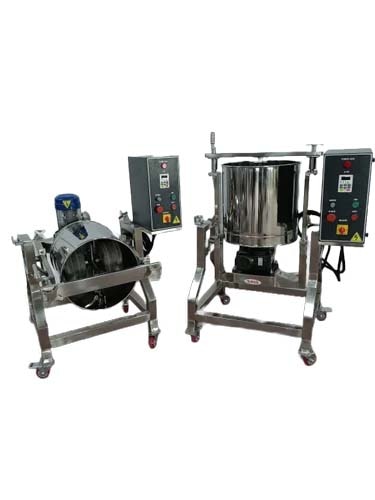 | Chocolate Grinder Chocolate Melanger Chocolate Grinder / Chocolate Melangeur Machine – Cocoa Grinding Machine 🔹 Chocolate Melangeur Manufacturer in Coimbatore We are a leading manufacturer and supplier of chocolate grinder and chocolate melangeur machines in... View product → |
 | Chocolate Grinder Chocolate Melanger Chocolate Melanger / Cocoa Grinding Machine – Chocolate Making Machine 🔹 Chocolate Melanger Manufacturer in Coimbatore We are a leading manufacturer and supplier of chocolate melanger and cocoa grinding machines in... View product → |
Frequently asked questions
What does tilting change in a chocolate wet grinder?
A tilting vessel uses gravity to move viscous chocolate mass toward the discharge side, reducing manual scooping and improving emptying. Confirm whether the complete bowl pivots, the outlet opens separately, or both features work together.
Where does a tilting wet grinder fit in chocolate processing?
It supports wet grinding, refining, and mixing after ingredient loading and before downstream steps such as tempering, moulding, or packaging. It does not replace a tempering machine.
How should you compare a tilting grinder with other chocolate equipment?
Compare its grinding action, batch capacity, discharge method, temperature control, cleaning access, and usable output against fixed-bowl grinders, melangers, ball mills, and dedicated refiners.
How do you calculate usable output from a chocolate grinder?
Start with the working batch capacity, then subtract material retained on the vessel, stones, scraper, lid, and discharge path. Record the recovered mass from a representative trial instead of using the vessel’s total volume.
How can you control chocolate temperature during grinding?
Measure chocolate at the start, during processing, and at discharge. Ask for the machine’s heat-management method, sensor location, operating limits, and test data under your intended recipe and batch size.
Related products
 | Cocoa Grinding Machine or Chocolate Melanger Cocoa Grinding Machine / Chocolate Melanger – Chocolate Making Machine Cocoa Grinding Machine Manufacturer in Coimbatore We are a leading manufacturer and supplier of cocoa grinding machines and chocolate melanger... View product → |
 | Cocoa Grinding Machine or Chocolate Melanger Cocoa Grinding Machine / Chocolate Melanger – Chocolate Processing Machine Cocoa Grinding Machine Manufacturer in Coimbatore We are a leading manufacturer and supplier of cocoa grinding machines and chocolate melanger... View product → |
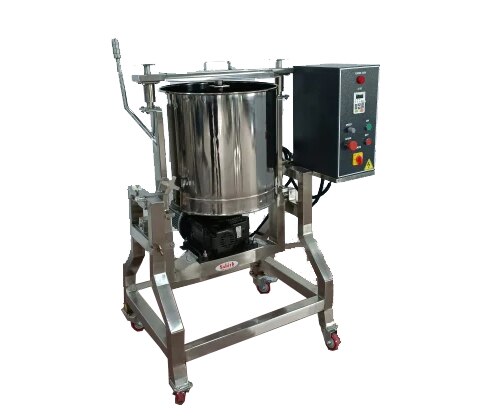 | Chocolate Machine Manufacturers Sahith Chocolate Grinder / Nut Butter Grinder – Cocoa Grinding Machine Chocolate Grinder & Nut Butter Grinder Manufacturer in Coimbatore We are a leading manufacturer and supplier of chocolate grinder and nut butter... View product → |
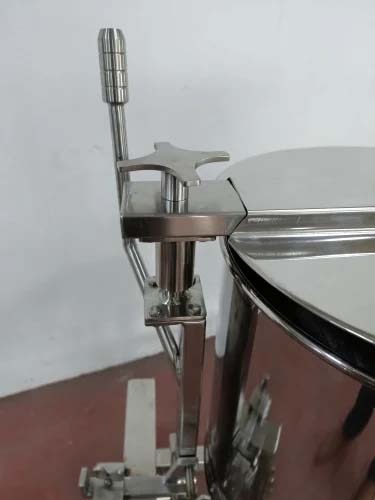 | Cocoa Grinding Machine or Chocolate Melanger Chocolate Melanger Machine – Chocolate Grinding Machine Chocolate Melanger Manufacturer in Coimbatore We are a leading manufacturer and supplier of chocolate melanger machines in Coimbatore, Tamil Nadu,... View product → |
Keywords