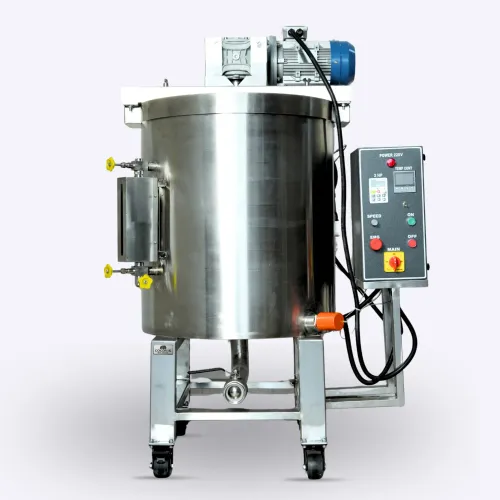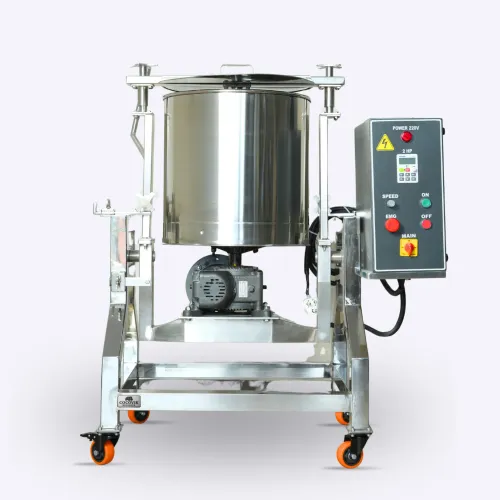
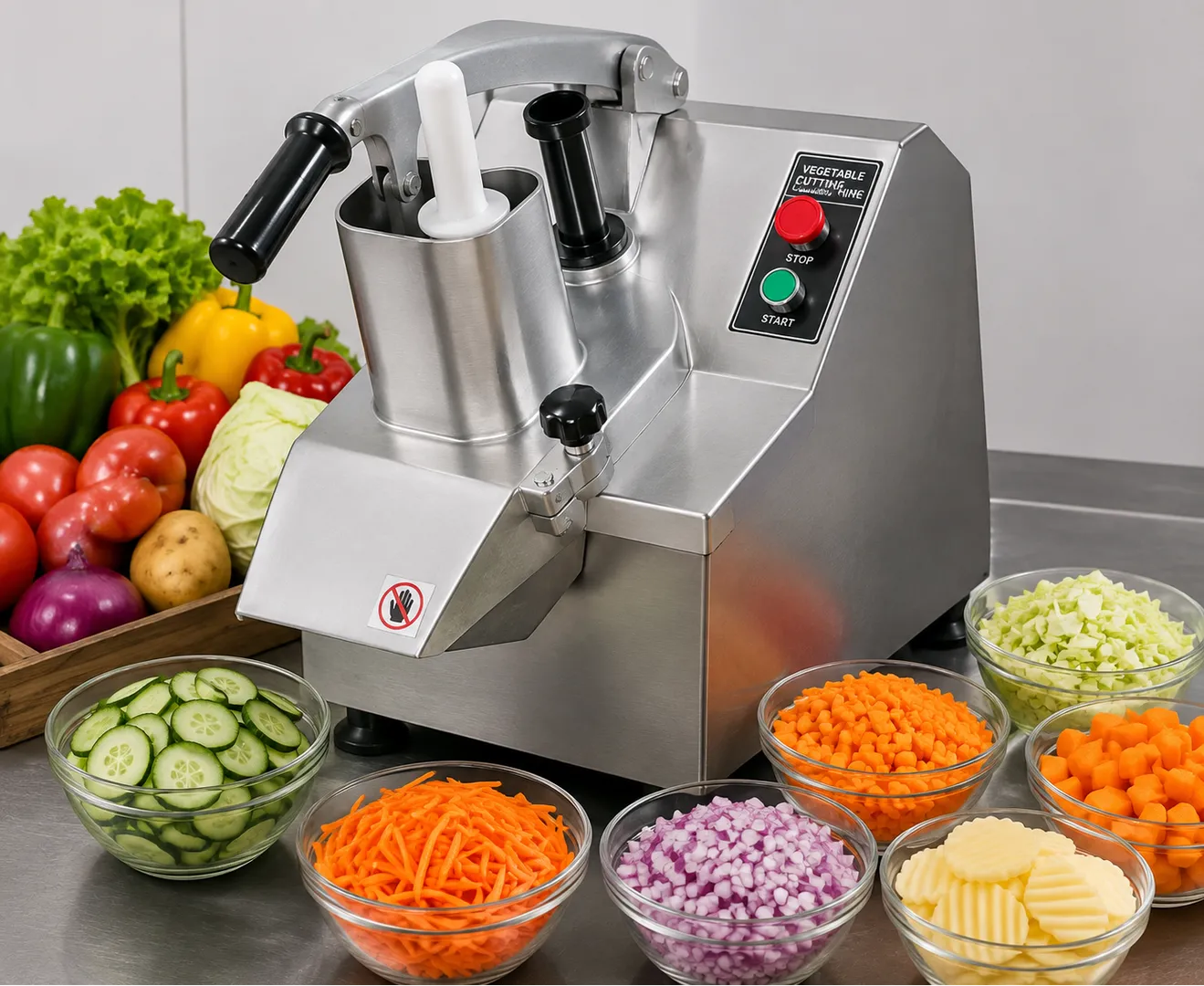
A commercial vegetable cutting machine can process frequently used vegetables into uniform shapes faster than repetitive manual preparation. It is commonly used by hotels, restaurants, caterers, cloud kitchens, hostels, institutional canteens, and central food preparation units.
The equipment is not simply a faster version of a knife. Its main value lies in standardising cut size, reducing preparation bottlenecks, and helping kitchens plan raw-material processing more accurately.
Common Cutting Applications
The exact output depends on the blade or cutting disc installed. Suitable machines can perform operations such as:
- Slicing
- Dicing
- Shredding
- Grating
- Chipping
- Julienne cutting
- Fine chopping
A restaurant may need thin onion slices for gravies, diced carrots for fried rice, shredded cabbage for fillings, and potato chips for snacks. These outputs may require separate blades rather than one universal attachment.
Buyers should create a vegetable-and-cut-size list before selecting a machine.
How Uniform Cuts Improve Cooking
Pieces of similar thickness tend to cook at a more consistent rate. When vegetables are cut unevenly, smaller pieces may become soft before larger ones are properly cooked.
Uniform preparation can improve:
- Cooking consistency
- Portion appearance
- Plating quality
- Frying performance
- Recipe standardisation
- Packing accuracy
For cloud kitchens and multi-outlet food businesses, this consistency also makes it easier to reproduce recipes across different locations.
Vegetables Require Different Handling
Not every vegetable behaves the same way inside a cutting machine. Firm produce such as carrots and potatoes may process differently from tomatoes, leafy greens, brinjal, or vegetables with high moisture content.
Factors affecting cutting quality include freshness, size, firmness, feeding direction, blade sharpness, and the amount loaded at one time. Produce may also need washing, peeling, trimming, or size reduction before it enters the machine.
A demonstration using the vegetables processed by the business offers more useful information than a test with only one easy ingredient.
Production Planning for Coimbatore Kitchens
Food businesses in Coimbatore often handle menus that combine South Indian dishes, North Indian items, bakery products, snacks, and banquet preparation. Vegetable demand can therefore vary significantly between ordinary service and event days.
Managers should measure the quantity prepared during the busiest shift and note how much staff time is spent on each cutting task. This provides a realistic basis for comparing machine output.
A very high-capacity model may not be necessary for a small restaurant. Conversely, an entry-level unit may create delays in a central kitchen supplying multiple branches.
Managing Food Waste
Manual cutting can produce inconsistent peel depth, irregular pieces, and excessive trimming. A correctly used machine may improve usable yield by producing repeatable cuts, although the result depends on the vegetable and preprocessing method.
Operators should sort produce by size and condition before processing. Damaged vegetables, stones, hard stems, or foreign objects can affect output and may damage the blade.
Collected offcuts should be monitored. A sudden increase in waste can indicate a dull blade, unsuitable feeding technique, or incorrect cutting attachment.
Hygiene and Allergen Control
The cutting chamber, blades, feed chute, and discharge area come into direct contact with food. These components need regular cleaning to prevent residue accumulation and cross-contamination.
Where a kitchen processes allergen-containing ingredients, cleaning procedures should be documented. Removable cutting parts must be handled carefully because their edges remain sharp even when the machine is switched off.
Choosing the Right Configuration
Sahith Engineering develops commercial kitchen equipment for different operational needs. When discussing a vegetable cutting machine, a buyer should specify the vegetables, required shapes, daily quantity, peak-hour demand, power supply, and preferred cleaning routine.
Useful evaluation questions include:
- Which cutting blades are supplied?
- Are additional blade sizes available?
- How quickly can attachments be changed?
- Which parts can be removed for cleaning?
- What is the recommended continuous operating period?
- Are replacement blades and service support available?
The right commercial vegetable cutting machine should complement the kitchen’s actual menu. When its blades, capacity, and workflow are properly matched, it can turn vegetable preparation into a controlled production stage rather than a daily source of delay.
Keywords