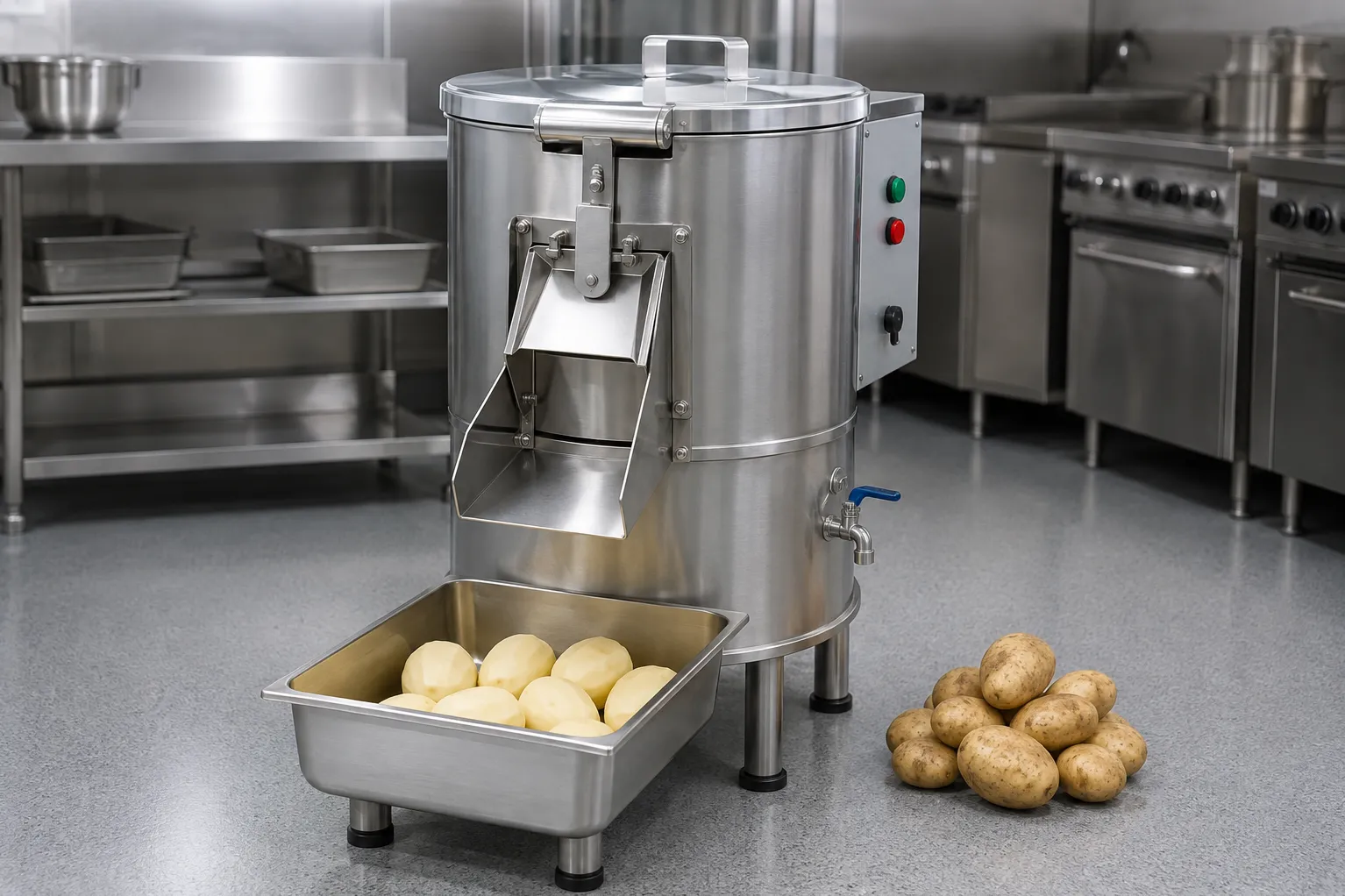
A commercial potato peeler removes the repetitive burden of peeling large quantities by hand. It is useful in restaurants, hotels, caterer kitchens, snack units, canteens, and food processing facilities where potatoes are prepared every day.
Efficient operation, however, involves more than filling the machine and switching it on. Correct sorting, batch control, cycle timing, cleaning, and inspection determine how much usable potato remains after peeling.
Select Suitable Potatoes Before Loading
Potatoes should be checked for stones, soil lumps, metal pieces, and severely damaged produce. Foreign objects may harm the peeling surface or interfere with movement inside the chamber.
Sorting potatoes into broadly similar sizes can improve peeling uniformity. When very small and very large potatoes are mixed in one batch, some may be over-peeled before others are adequately processed.
Sprouted, green, or spoiled portions require appropriate manual inspection and removal. Mechanical peeling does not replace food-quality checks.
Avoid Overloading the Chamber
Overloading prevents potatoes from moving correctly against the peeling surface. It can create patchy results, extend the cycle, and strain the machine.
Underloading may also reduce efficiency in some configurations because the expected tumbling action is not achieved. Operators should follow the manufacturer’s recommended working quantity rather than judging the load only by available chamber space.
A weighed batch provides more repeatable results than random loading.
Control the Peeling Duration
Longer peeling does not always mean better peeling. Excessive processing removes edible material, reduces yield, and creates more waste.
The ideal cycle depends on:
- Potato variety
- Size and shape
- Skin condition
- Storage age
- Surface moisture
- Required finish
Operators should begin with the recommended time and adjust gradually after inspecting the output. Recording the final cycle for common potato types helps maintain consistency between shifts.
Use Water Responsibly
Some commercial peelers use water to help remove loosened skin and carry waste away. Water flow should be sufficient for effective operation without being left uncontrolled.
The drainage arrangement must be planned before installation. Potato peel and starch can block unsuitable pipes, so the waste handling system should be easy to inspect and clean.
Businesses in Coimbatore should consider their premises’ water availability, drainage layout, and local waste-disposal practices when positioning the equipment.
Monitor Peeling Loss
Yield is one of the most useful performance indicators. A machine that peels quickly but removes excessive edible material may increase ingredient cost.
To measure loss:
- Weigh the potatoes before processing.
- Weigh the usable potatoes after peeling and inspection.
- Record the waste produced.
- Compare results across different cycle times.
- Standardise the setting that balances cleanliness and yield.
This simple check is valuable for caterers and quick-service kitchens processing several batches every day.
Clean the Machine After Production
Peel, starch, soil, and moisture can remain inside the chamber and discharge areas. If these residues are not removed, they may create odour, hygiene problems, or drainage obstruction.
The machine should be switched off and safely isolated before cleaning. Staff must follow the manufacturer’s procedure for removing or accessing internal parts.
Attention should be given to:
- Peeling surfaces
- Chamber walls
- Lid and loading area
- Discharge door
- Water inlet
- Waste outlet
- Surrounding floor
Electrical parts should not be exposed to uncontrolled water.
Inspect Wear Components
Peeling efficiency may decline as abrasive surfaces or related components wear. Longer cycles, irregular results, unusual vibration, leakage, or increasing waste are signals that inspection may be required.
Sahith Engineering manufactures equipment for commercial kitchens and food businesses. During machine selection, buyers should discuss batch capacity, potato condition, daily volume, water connection, drainage, cleaning access, and replacement-component availability.
A commercial potato peeler delivers its best value when it protects usable yield as well as labour time. Careful batch preparation and cycle control help kitchens achieve cleaner potatoes without turning avoidable product loss into a hidden daily expense.
Keywords