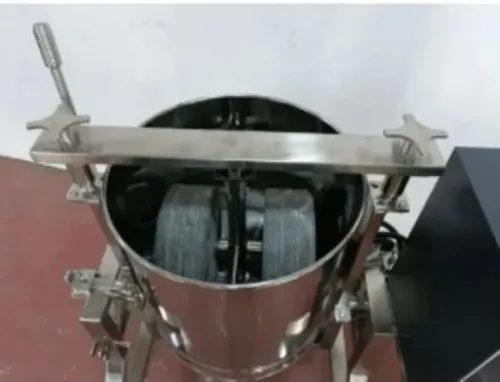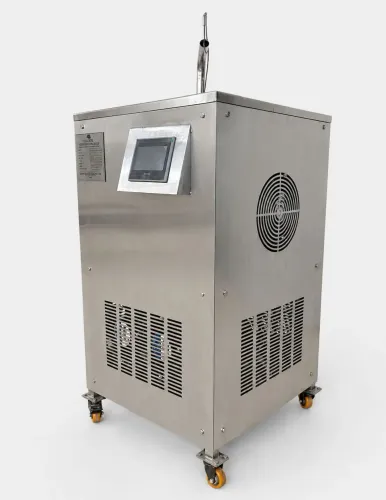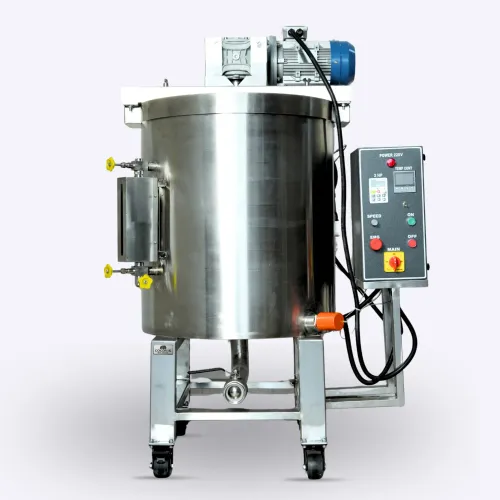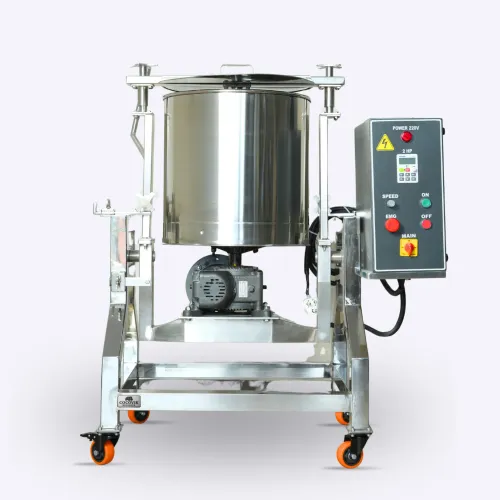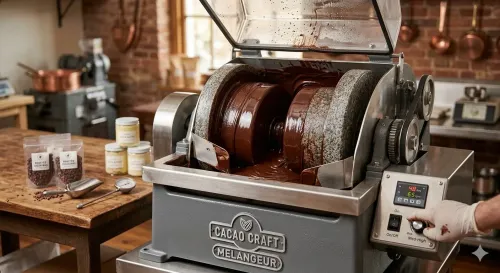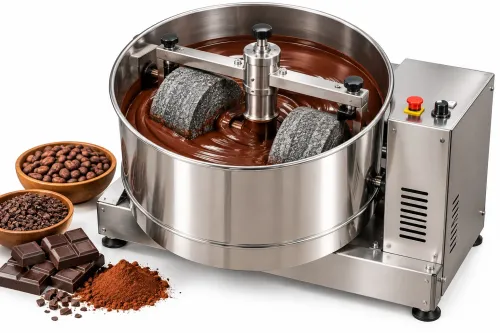
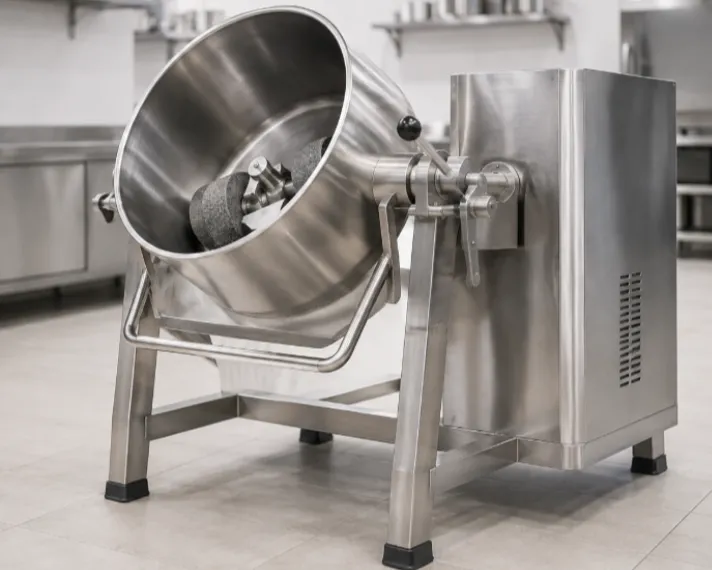
A commercial tilting grinder helps restaurants, hotels, caterers, canteens, and food production units prepare batter and other wet-ground mixtures in larger quantities. Unlike domestic appliances, it is designed for repetitive processing, heavier loads, and easier discharge.
For kitchens in Coimbatore and other parts of Tamil Nadu, choosing the correct grinder capacity is particularly important. Idli, dosa, vada, chutney, and masala preparation can account for several hours of daily production. An undersized grinder slows the kitchen, while an oversized machine may consume unnecessary floor space and power.
Start With the Required Batter Output
Grinder capacity should be selected according to actual production rather than the number of meals served. Two restaurants serving the same number of customers may have very different batter requirements depending on their menus.
Before comparing machines, calculate:
- Average batter required on a normal working day
- Peak requirement during weekends and functions
- Number of grinding batches completed daily
- Available preparation time before service
- Expected increase in production during the next two years
A kitchen that needs several consecutive batches should not rely only on the stated drum capacity. Grinding time, loading time, unloading, cleaning, and ingredient preparation all influence practical daily output.
Understand Usable Capacity
The rated capacity of a commercial tilting grinder does not always mean that the drum should be filled completely. Rice, lentils, water, and other ingredients need space to circulate properly.
Overloading can result in uneven grinding, longer processing cycles, motor strain, and inconsistent batter texture. The correct working load depends on the recipe, ingredient ratio, soaking condition, and desired consistency.
A reliable manufacturer should explain both the nominal capacity and the recommended usable capacity for common applications.
Match the Machine to the Menu
The right grinder also depends on what the kitchen prepares. Idli batter generally requires a smooth, well-aerated consistency, while masala pastes and chutneys may behave differently during processing.
Commercial kitchens should consider whether the machine will be used for:
- Rice and urad dal batter
- Vada batter
- Chutneys and wet masalas
- Spice pastes
- Soaked grain mixtures
- Specialty regional recipes
If several products will be prepared, the machine should provide consistent grinding across different ingredient densities without frequent stoppages.
Check Motor Suitability
Motor capacity must correspond to the working load. A properly matched motor supports stable operation and reduces the risk of overheating during repeated batches.
Buyers should ask about the motor rating, phase requirement, overload protection, transmission system, and expected continuous operating duration. Three-phase power may be suitable for larger establishments, but the electrical connection available at the premises should be checked before ordering.
Local voltage conditions and daily operating patterns in Coimbatore food businesses should also be discussed with the equipment supplier.
Evaluate the Tilting Mechanism
The tilting system is one of the most useful features of this equipment. It allows operators to discharge batter without manually lifting heavy vessels or scooping the entire batch from a fixed drum.
A good mechanism should:
- Tilt smoothly under a full working load
- Hold the drum securely during grinding
- Allow controlled pouring
- Reduce batter spillage
- Be easy for trained staff to operate
The receiving vessel’s height and width should be compatible with the discharge position. Testing this arrangement before purchase can prevent workflow difficulties later.
Consider Space and Cleaning Access
Measure the installation area, including the space needed for loading, tilting, unloading, and cleaning. A machine may fit physically but still be difficult to use if it is placed too close to a wall or another appliance.
Food-contact surfaces should be accessible for washing. Stainless steel construction, smooth finishes, removable parts, and limited residue-trapping areas make routine sanitation easier.
Sahith Engineering manufactures commercial kitchen machinery for different production requirements. When evaluating a tilting grinder, buyers should discuss recipes, batch frequency, site dimensions, electrical availability, and expected output rather than selecting capacity from a catalogue alone.
A well-sized grinder improves production flow without burdening the kitchen with avoidable power use or maintenance. Capacity planning at the beginning helps the equipment remain practical as the business grows.
Keywords